1133 Budapest, Tutaj u. 6/b, Cézár-Ház
 Opening hours: Mo-Fr 08:00-20:00
 Contact: +36 1 801 2250

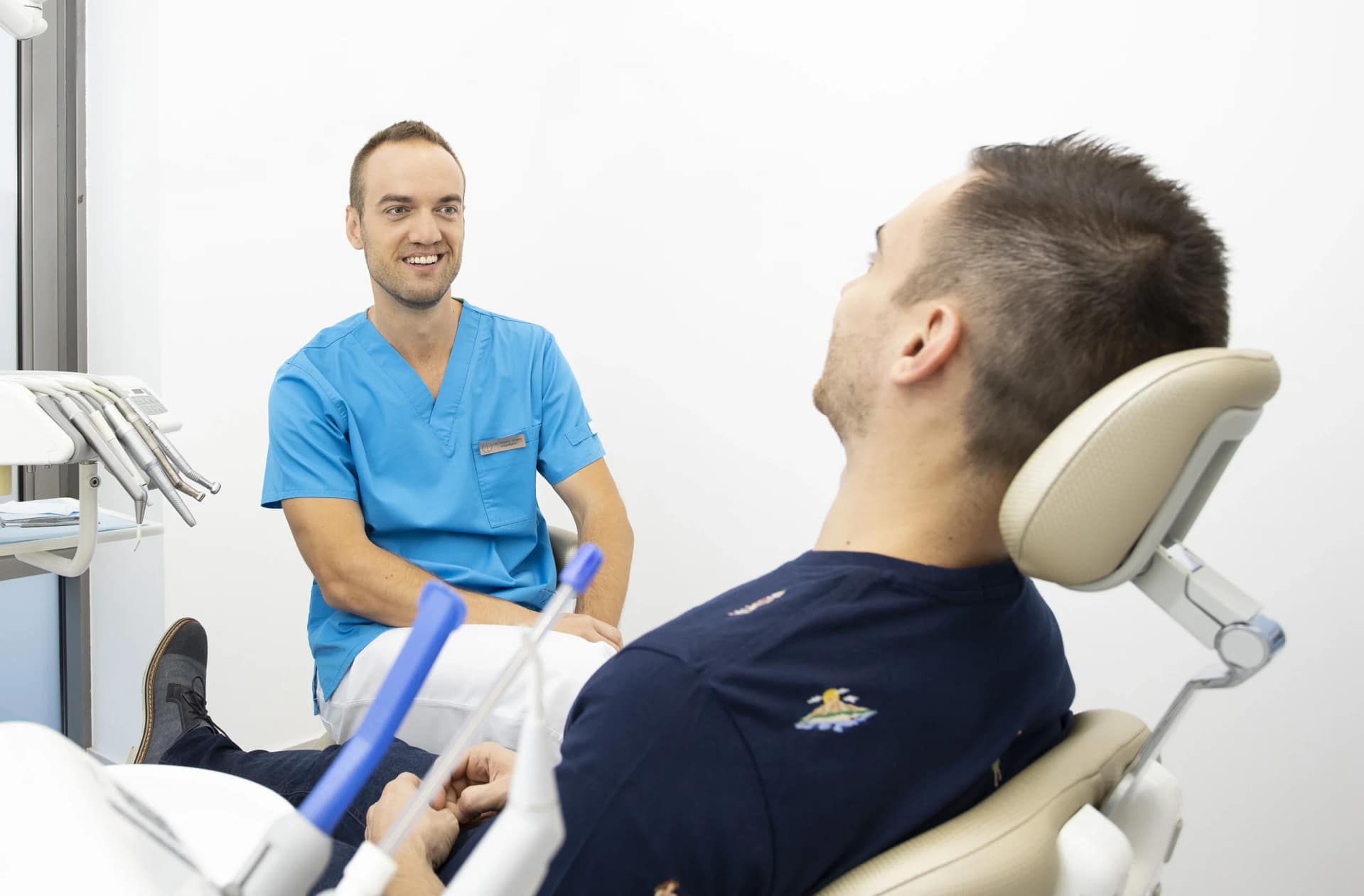
3 reasons to choose an oral surgeon
Dentistry today is not just about fillings and extractions. Oral surgery is one of the most complex areas of dentistry, dealing with the surgical treatment of teeth, bone and soft tissues. The aim of treatment is not only to relieve pain, but to ensure long-term functional and aesthetic stability.
1. Specialist qualifications After several years of training, an oral surgeon is qualified to perform complex operations that can have a lasting effect on the patient’s oral and physical health.
2. Their work is backed by a sterile environment and equipment Procedures involving surgical exposure require special surgical equipment.
3. Experienced in solving complex cases Through specialisation in oral surgery (e.g. maxillofacial surgery, dentoalveolar surgery), the dentist has gained skills and experience in procedures such as:
- surgical removal of teeth, roots and impacted teeth,
- implant placement and bone grafting,
- surgical treatment of cysts and inflammatory lesions,
- treatment of injuries from accidents,
- treatment of tumours of the mouth and maxillary sinus, etc.
7 cases when oral surgery is definitely needed
Emergency or private oral surgery is definitely needed for the following:
1. Extracting a tooth that cannot be saved or is severely damaged If the tooth can no longer be restored, professional removal can prevent inflammation and complications caused by an infected tooth.
2. Removing a wisdom tooth trapped in the jawbone An unerupted wisdom tooth can cause pain, inflammation and crowding.
3. Removing a broken tooth or remaining root Removing root fragments often requires surgical exposure.
4. Dental implant placement (implantation) Precise positioning of an implant requires surgical planning.
5. Bone grafting before implantation If there is insufficient bone, preparatory surgery is needed.
6. Bone grafting combined with a sinus lift A common procedure for implants in the upper jaw.
7. Removing dental cysts Cysts can cause bone destruction if they are not removed.
Oral surgery treatment in brief
1. Assessment and diagnostics 2. X-ray or 3D CBCT scan 3. Drawing up a treatment plan 4. Procedure or surgery under local anaesthetic 5. Check-up and aftercare
What can you expect without professional oral surgery care?
- Without the right equipment and expertise, a bad experience: prolonged procedures and discomfort.
- Difficulties due to lack of experience: the most common problems are a broken tooth, a root left in the jawbone, bone loss due to a poorly performed extraction, and loss of sensation due to permanent damage to the nerve canal. There are also many failed implants.
- Post-operative complications: inflammation or infection resulting from inadequate aftercare or incomplete information, an opened maxillary sinus, slow healing.
Recommended for you
Book an oral surgery consultation and meet our oral surgery specialists!
Or book by phone:
What should you know about oral surgery procedures?
1. Tooth removal
Why is expert tooth extraction important?
If you later want to replace the gap with an implant, it is better to entrust the extraction to an oral surgeon. It is important that the tooth is removed thoroughly and carefully, to preserve as much bone as possible, which will later form the socket for the implant.
What can make it more difficult?
Tooth extraction is a routine procedure, but there can be complicating factors:
- if the tooth has not erupted,
- if the tooth has grown in the wrong place,
- if it is a supernumerary tooth,
- if a broken tooth root needs to be removed
- if access is difficult because of limited mouth opening.
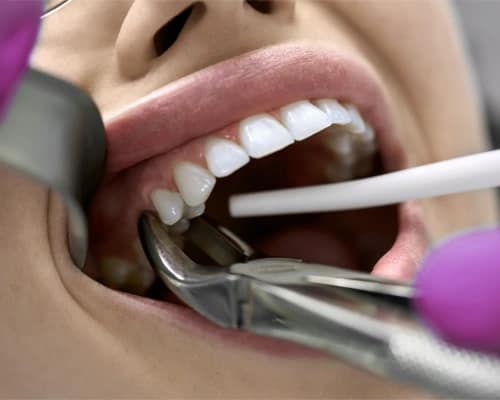
2. Wisdom tooth surgery
Which tooth is the wisdom tooth? Wisdom teeth are the eighth teeth, the molars at the very back of the row. Why do wisdom teeth need to be removed?
- They can disturb neighbouring teeth, pushing against the tooth in front as they grow, which causes toothache and crowding.
- They are difficult to clean, often almost impossible, so they decay easily.
- Because of limited mouth opening, fillings and root canal treatment are not easy either, so the result is not guaranteed.
What can make it more difficult? Removing an unerupted wisdom tooth (lying completely horizontal or growing at an angle) requires experience, surgical conditions, special instruments and a sterile environment. The procedure can be simple if these conditions and an experienced oral surgeon are in place.
Recommended for you
Important things to do before surgery, and tips for fast healing after wisdom tooth surgery.
- Recommended for you:
- Wisdom tooth surgery – How to prepare
3. Exposing retained, impacted teeth
What are impacted teeth? This oral surgery procedure applies to teeth that are prevented from erupting through the gum. They have not grown as they should and lie horizontally or at an angle.
Why do they need to be removed? The procedure is often carried out for orthodontic purposes, and must be performed so that it is safe for the patient.
What can make it more difficult? During surgery, care must be taken to avoid important anatomical structures (sinus membrane, roots of neighbouring teeth, nerve canal), as damaging them can cause serious complications. That is why a panoramic X-ray and a 3D CBCT scan are needed to plan the surgery.
4. Dental implant placement
What is implantation?
Implantation is the basis of the most modern form of tooth replacement. As part of the process, an artificial root is placed in the jawbone, which takes over the function of the tooth root in the later restoration.
How is an implant placed?
- The oral surgeon uses a special drill to create a bone socket of the right size in the jawbone.
- The threaded dental implant is screwed in.
- The wound is closed with stitches.
What needs attention during the procedure?
It is important that the implant is anchored in the bone with sufficient stability, which requires enough bone.
Recommended for you
How much does a dental implant cost, what are the preparations, how is the operation carried out, and when will you have a finished restoration? You can find out all this and much more about dental implants!
- Dental implants – This is what happens when you go ahead! From consultation to finished restoration
5. Bone grafting
What is bone grafting? Bone grafting is considered when there is not enough bone to place an implant. Valuable bone can be lost through disease, inflammation or a less expert extraction, when the bone wall holding the tooth can crack or break.
How extensive a procedure should you expect? This depends on the extent of the deficiency. In most cases, it is done under local anaesthetic, even at the same time as implant placement. In some cases, however – where the deficiency is larger – separate operations are needed.
What can make it more difficult? If significant tooth and bone loss is due to disease or an accident, a larger-scale, specialised bone grafting procedure may be needed. This requires hospital conditions and general anaesthesia.
6. Sinus lift
What is a sinus lift? A sinus lift is a special type of bone grafting procedure.
- It is needed when the sinus membrane is low and there is too little bone to place an implant without it protruding into the maxillary sinus.
- There are two types, closed and open, of which the open procedure requires greater precision and experience.
- In some cases, the open procedure can also be carried out at the same time as implant placement, but separate operations are often needed.
How is it done? During sinus surgery, the oral surgeon lifts the sinus membrane away from the bone and fills the resulting space with bone graft material. As a result, the floor of the sinus is raised, the grafted bone integrates, and there is enough space and bone to place the implant.
What can you expect without surgery? Implant placement without a sinus lift can lead to complications, as sinus inflammation can easily endanger the implant.
7. Apicoectomy (root tip removal)
What does apicoectomy mean? Amputation of the tip of the root is carried out after root canal treatment of the tooth.
- If the inflammation can no longer be controlled or eliminated with root canal treatment.
- If the dental cyst there is not expected to resolve.
- If the curvature of the tooth root makes it impossible to access and precisely treat the canals.
- If a false path was created during root canal treatment.
- If a root canal instrument has broken inside the canal.
- If root filling material has been pushed beyond the tip.
What does apicoectomy involve? The process starts with precise root canal treatment. At the end of the treatment, the root canals are sealed with a root filling that reaches the tip, adheres to the walls and seals perfectly.
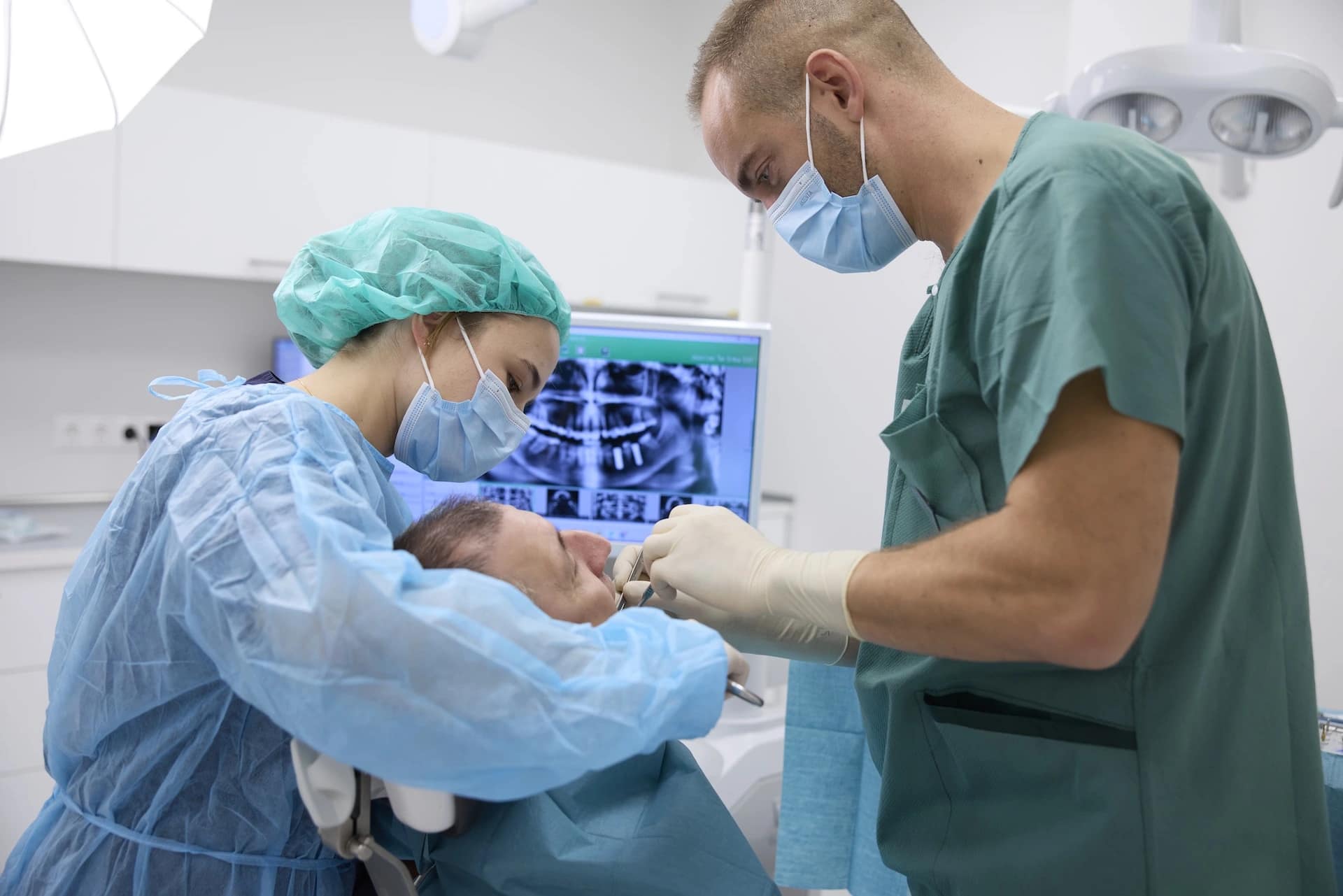
- A panoramic X-ray or CT scan is taken to plan the surgery.
- During root tip resection, the oral surgeon removes the tip of the tooth root together with the inflamed tissue or cyst, then thoroughly cleans the surrounding area before closing it.
Recommended for you
Book an oral surgery consultation and meet our oral surgery specialists!
Or book by phone:
Oral surgeon’s advice for healing
During healing, the most important thing is to follow the doctor’s instructions.
The specialist uses stitches to close the surgical area, so you will definitely need to book a dental appointment for a check-up and stitch removal after about 7–10 days.
Oral care is also extremely important, as plaque forming in a mouth that is not kept clean enough can infect the fresh surgical wound.
- Avoid housework and chores around the house – be sure to take it easy!
- Avoid sports, saunas, hot baths, etc. You may feel tightness and throbbing, bleeding may start again, and stitches may tear.
- For 24 hours after the procedure, you must not suck on or rinse the surgical area, and you must not touch the wound!
- Brush your teeth regularly with a soft toothbrush, taking special care around the surgical area!
- After removing an upper tooth or a sinus lift operation, the maxillary sinus also needs protecting. Don’t suppress sneezes, as the pressure may open the sinus, which would require further medical treatment. Instead of blowing your nose hard, use seawater nasal drops, which make it easier for mucus to drain, and gently wipe your nose rather than blowing it forcefully.
Frequently asked questions after surgery
How can pain be managed after oral surgery?
- It is not advisable to eat until the anaesthetic wears off (3–4 hours), to avoid painful injuries caused by chewing.
- Pain after surgery is relatively mild, but its intensity varies from person to person. Over-the-counter painkillers and toothache medication are suitable for relieving it.
- The jaw joint may be painful and sensitive, and you may have difficulty opening your mouth. Massaging the jaw (e.g. with an anti-inflammatory gel) can help recovery.
What can you do about swelling and bruising after surgery?
- Facial swelling or bluish-purple discolouration of the skin is normal (more common in women) and goes away on its own within a few days.
- It is recommended to cool the face from the outside with an ice pack for 10 minutes every hour, which not only prevents swelling but also relieves pain.
- It is important not to let your face get cold, and NEVER apply a wet cloth to the surgical area!
How long should antibiotics be taken after dental surgery?
- In most cases, a course of antibiotics is needed. The medication must always be taken as instructed by the doctor. It helps prevent post-operative complications such as implant failure, wound inflammation or infection.
- Stopping the medication early can lead to infection, and over time antibiotic resistance may develop.
- During the course, probiotics are also needed to prevent digestive problems. Women will also need local probiotics to prevent gynaecological complaints.
Can you smoke after oral surgery?
- Cigarettes and other tobacco products lead to slower wound healing after surgery, pain after extraction and inflammation.
- They also increase the chance of complications that lead to dental implant failure after placement.
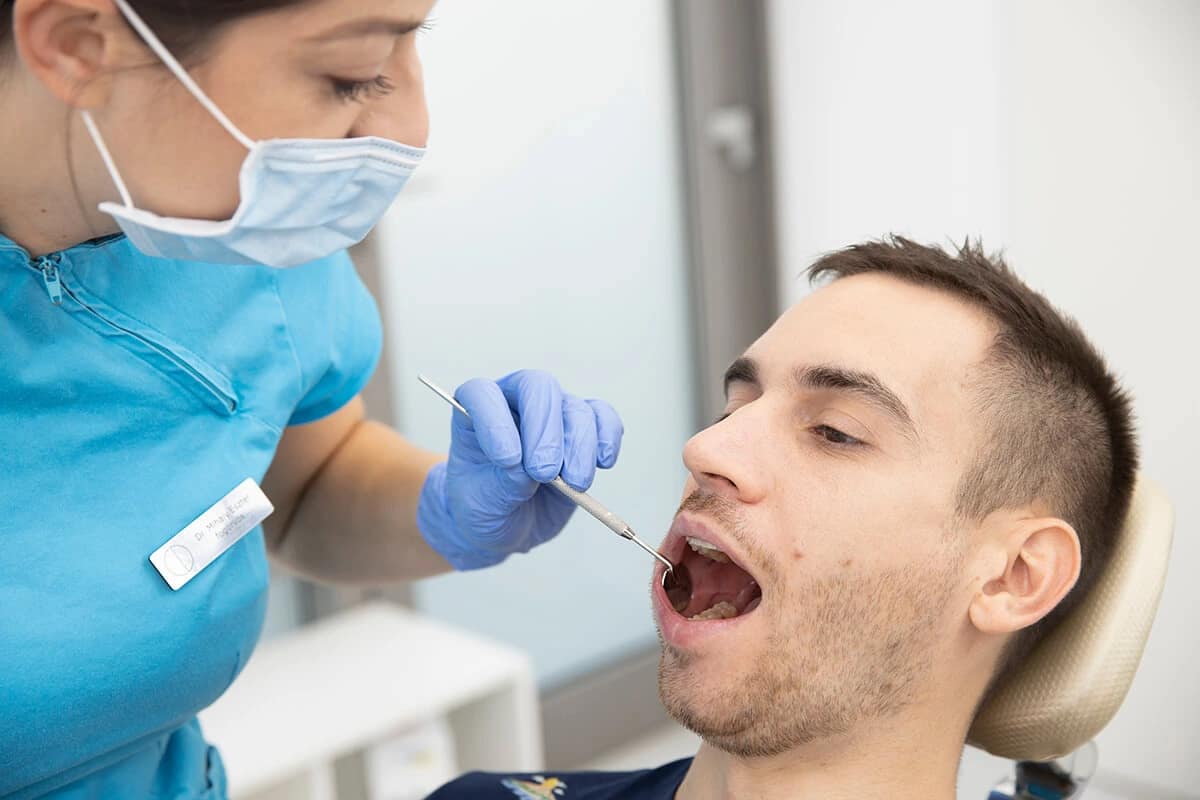
How can healing after surgery be speeded up?
Wound healing is the body’s natural response, so there is no need to rush it. The best thing you can do is support the process by following the doctor’s instructions. Rest, and let your body recover at its own pace.
What can you eat after oral surgery?
- To avoid problems and complications, avoid milk, cheese and other dairy products, eggs and dishes containing raw meat for 4–5 days, as their bacterial content increases the risk of infection.
- Hot, spicy, crumbly foods and foods with small seeds, as well as fizzy drinks and alcohol, are not allowed.
Recommended for you
Book an oral surgery consultation and meet our oral surgery specialists!
Or book by phone:
Our dentists who carry out oral surgery:
Clinident Dental Clinic and Oral Surgery, Budapest
Hospital oral surgery emergency departments, where patients with broken teeth end up, are often overcrowded, so patients rarely feel comfortable there.
Patient-centred care is mostly found in private oral surgery. Empathetic staff and oral surgeons are available at private clinics in Budapest with decades of history.
- Dentistry has now become a broad specialist field, and at our clinic, with our experienced and precise dentists, safe and modern private oral surgery is available alongside cosmetic treatments.
- In the nearly 20 years our clinic has been operating, we have raised personalised care to a professional level. Our patients experience the benefits of modern dentistry painlessly, without discomfort, in the most comfortable way possible.
- Clinident oral surgery provides the same professional care and expertise for tooth root removal and simple extractions as for a more complex sinus lift or implant surgery.
- At our clinic, oral surgery procedures are carried out under local anaesthetic, and we give precise guidance for a successful recovery after surgery, so that healing is faster.
This page was reviewed by: Dr. Sándor Kovách, oral surgeon