1133 Budapest, Tutaj u. 6/b, Cézár-Ház
 Opening hours: Mo-Fr 08:00-20:00
 Contact: +36 1 801 2250

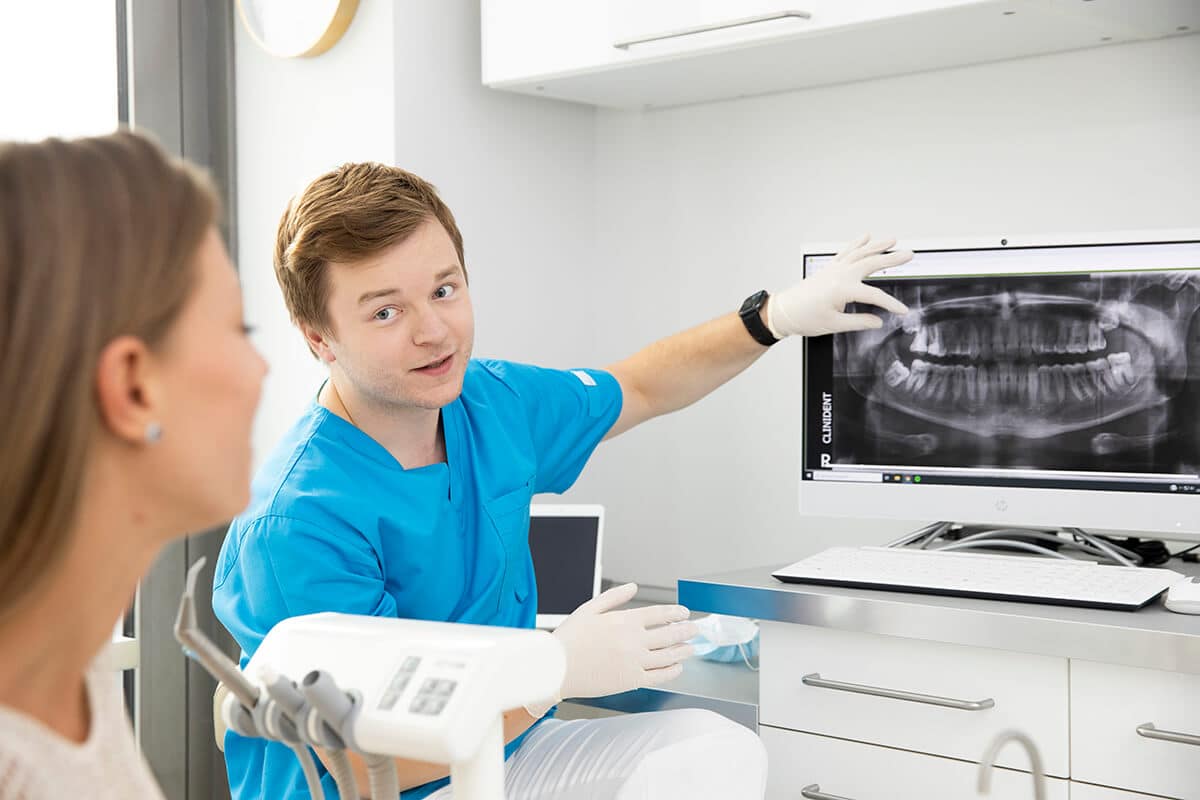
When do wisdom teeth need to be removed?
As many as 75–80 per cent of adults may suffer because of their wisdom teeth, so don’t feel that you are alone with your problem. Thanks to evolution, there is gradually not enough room for these four molars in our ever-smaller jaws, so they cause patients more and more trouble.
Wisdom teeth usually erupt between the ages of 18 and 30, but most often they do not come through at all, or grow in the wrong position. As a result, they cause inflammation in the affected area, so if a wisdom tooth hurts, oral surgery becomes necessary and it has to be removed.
The wrong position of a wisdom tooth means that:
- it lies horizontally,
- it is tilted against the tooth in front of it, putting pressure on it,
- or it is trying to erupt tilted outwards or inwards.
1. If it hurts, becomes inflamed or causes gum inflammation
Removal is strongly recommended if they cause recurring oral hygiene problems.
- Wisdom teeth are the hardest teeth to clean, so if brushing them is difficult, they can easily decay.
- The back surface of a wisdom tooth is the most problematic, as it is typically covered by gum, so a pocket often forms around the tooth, where bacterial infection destroys the gum and bone.
- Decay and pus-filled pockets then lead to pain and bad breath.
2. If they are difficult to treat
The back teeth are difficult to reach even for the dentist. Even a filling or root canal treatment is hard to carry out.
- Because the instruments are too large, the patient may have difficulty opening their mouth and may have a sensitive gag reflex, the chances of saving the tooth are limited.
3. If the tooth grows irregularly
If it cannot erupt properly, if it pushes against the tooth in front of it, if it causes crowding, if it pushes the row of teeth and puts the whole dental arch under strain.
- The removal of teeth remaining in the jawbone should always be entrusted to an oral surgeon.
- These extractions are surgical procedures – they require proper preparation and aftercare.
- The procedure takes place under sterile conditions, the surgeon closes the surgical area with stitches, and the patient then recovers with the help of medication.
4. If you are about to start orthodontic treatment
Although the eruption of wisdom teeth does not cause huge crowding, in most cases specialists recommend removing unerupted teeth before orthodontic treatment.
- A third molar that erupts later, after orthodontic treatment, can cause visible or uncomfortable pressure and movement in the newly straightened teeth.
- As the years go by, our bones become harder, so healing may be quicker and easier after wisdom teeth are removed at a younger age.
What can you expect without extraction?
Wisdom tooth extraction is not mandatory, but it is worth considering if they cause recurring problems from time to time.
Pocket formation: infected pockets destroy the periodontium and damage the neighbouring teeth.
Cyst formation: teeth that cannot erupt may develop a cyst around them, which can destroy the jawbone.
Focal infection: since bacteria can reach other organs through the bloodstream, these decayed, diseased, inflamed teeth are considered focal infection teeth. (They may also play a role in cardiovascular problems, polyarthritis, eczema, hair loss, gynaecological problems and respiratory complaints.)
What does wisdom tooth extraction involve?
There are two methods for removing wisdom teeth:
Simple wisdom tooth removal: this applies to teeth that have already erupted; the oral surgeon extracts the tooth taking the anatomical conditions into account.
Surgical removal: the specialist uses this for teeth that have not erupted or whose eruption is obstructed. In addition to conventional extraction instruments, the wisdom tooth is freed from the bone using special surgical equipment.
How is a wisdom tooth extracted?
1. Panoramic X-ray, digital diagnostics Before wisdom tooth removal, a panoramic X-ray or 3D CT scan is always needed. It is important to know the individual anatomical conditions, i.e. where the nerve canal runs in the lower jaw, and whether the maxillary sinus may be affected in the upper jaw.
2. Local anaesthetic Both simple wisdom tooth extraction and surgical removal are performed under local anaesthetic, which is more than enough to make the procedure completely painless. Thanks to the modern anaesthetic, the sensory nerves can be completely switched off for the duration of the treatment.
3. Tooth removal
An erupted third molar is removed with conventional instruments, i.e. forceps, while for surgery sterile conditions are created for the extraction. An incision is made in the gum to give a better view of the area, and the tooth is then freed from the jawbone using special surgical instruments.
4. Wound closure and prescription
The wound is closed with stitches, and painkillers and, if necessary, antibiotics are prescribed for the healing period.
5. Aftercare – booking a follow-up appointment
A follow-up appointment after 7–10 days is needed to remove the stitches and check the wound. Doctors recommend resting on the day of the procedure, but longer sick leave is usually not necessary.
Recommended for you
Wisdom tooth surgery – How to prepare
- Important things to do before wisdom tooth surgery, tips for fast healing and pain relief. Symptoms after surgical tooth removal and how to deal with them
Why trust our clinic with your wisdom tooth removal?
- Expertise: At our clinic, operations are always performed by recognised oral surgery specialists.
- Experience: Our oral surgeons have decades of experience and have performed hundreds of successful operations.
- Care at home: After the operation we give you a free oral care kit containing a special toothbrush and toothpaste for gentle cleaning, as well as an ice gel pack to reduce swelling as quickly as possible.
- What to do after surgery: We give you precise written information about what to do at home, and about the things you absolutely must avoid for a few days to help healing.
- Aftercare: We usually check wound healing and remove the stitches about 10 days after the procedure.
More frequently asked questions about wisdom tooth extraction
Do wisdom teeth have to be removed?
Wisdom tooth removal is not mandatory. Minor decay can usually still be treated successfully, and gum inflammation behind the tooth can be resolved quickly and painlessly with a small trim.
We recommend removing wisdom teeth that have grown in incorrectly or have not erupted so that they do not cause problems later, do not damage the neighbouring tooth, and so that the affected area is easier to clean.
Why is it not a problem to have no wisdom teeth?
People today no longer need wisdom teeth at all. They no longer play such an important role in chewing as when we ate everything raw. Many people do not even have the tooth buds, and doctors typically consider them an “evolutionary remnant”.
Who will remove my wisdom tooth?
Wisdom tooth removal is a procedure that requires thoroughness and precision, and later complications can only be avoided with expert treatment. With our clinic’s experienced oral surgeons, complicated extractions can be avoided, as can a broken tooth or tooth root.
How much does wisdom tooth extraction hurt?
No matter how severe your toothache, the treatments provided by Clinident’s dentists are gentle and painless. There is no reason to be afraid or worried, as with every procedure we aim for speed and to eliminate or minimise discomfort.
Extracting a painful wisdom tooth
If you are suffering from wisdom tooth pain, it is important to establish whether the tooth is inflamed. The first priority is to reduce the inflammation, because otherwise wisdom tooth extraction will hurt. This makes the anaesthetic more effective and prevents bacteria from putting a general strain on the immune system via the bloodstream. In this case, the dentist prescribes antibiotics and only removes the tooth afterwards.
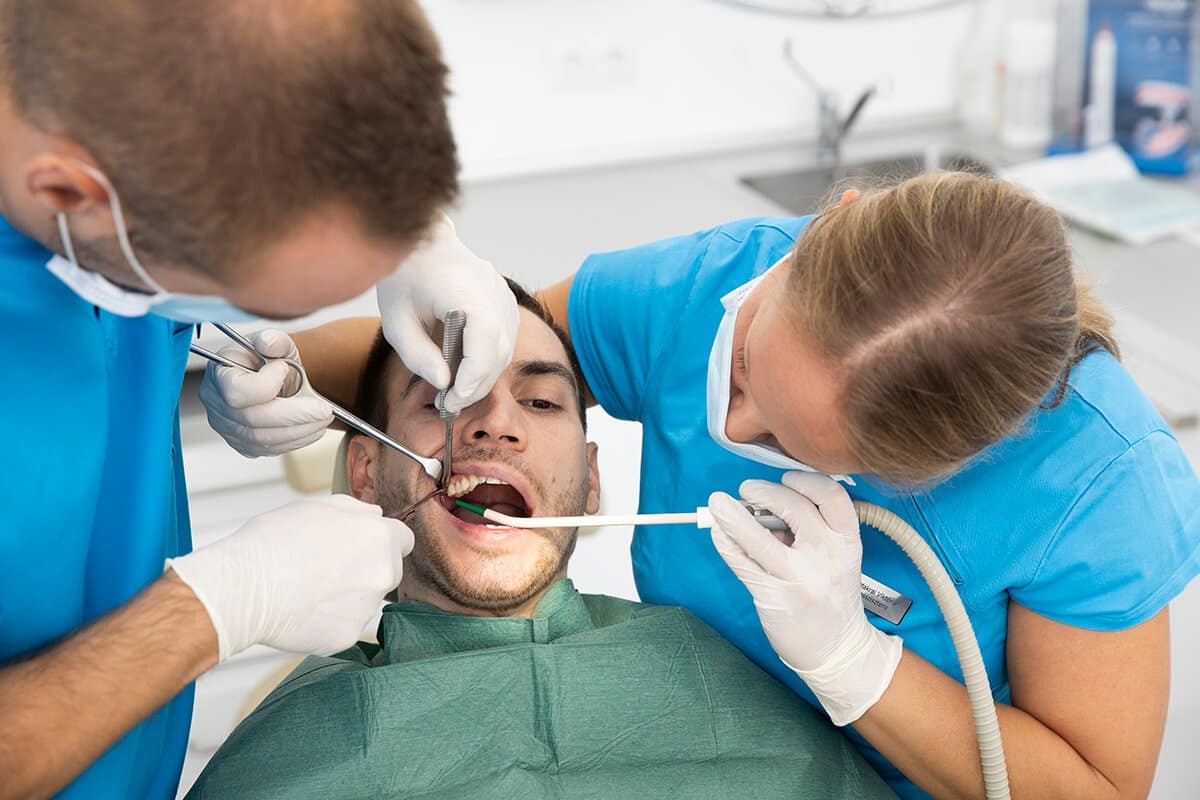
Is removing a lower wisdom tooth really more painful than an upper one?
Thanks to the anaesthetic, the patient feels no pain during the removal of either a lower or an upper third molar.
- The difference between the two jaws lies in the different bone quality.
- While the lower jaw can be denser and harder, the upper jaw is “softer” and looser in structure.
- Accordingly, removing a lower one takes a little more time and more experience than an average extraction.
How much pain should you expect after the extraction?
Wisdom tooth extraction requires opening the mouth wide, as the tooth to be removed is the last in the row, so it is hard to see and access.
- The procedure can put a strain on the jaw and joints. It comes with side effects such as difficulty opening the mouth and jaw joint tenderness. Gently massaging the joint helps the area recover.
- Complications after tooth extraction may include wound inflammation, persistent pain after extraction, throbbing and bleeding. However, these only occur if you do not follow the doctor’s instructions. By taking painkillers and following oral hygiene rules, healing will be smooth.
How should you brush your teeth after an extraction?
The secret to fast healing is following the aftercare instructions. At our clinic, we also give you detailed home oral care instructions after wisdom tooth removal.
The most important things to do after wisdom tooth extraction:
- Do not eat while the numbness lasts! Loss of sensation after a procedure under local anaesthetic can last for hours, so you could injure yourself when chewing!
- Avoid alcohol and fizzy drinks, and put coffee and milk aside for a few days too. You can drink other liquids freely.
Recommended for you
What can you eat after a tooth extraction and what should you avoid?
- What should you pay attention to immediately after an extraction, and what is not allowed? What can and can’t you eat?
- Do not rinse for 2–3 days, and avoid spitting too, because the resulting suction removes the blood clot that promotes healing from the wound!
- Brush your teeth thoroughly – even on the day of the extraction! Clean the area around the wound with a soft-bristled toothbrush too! Be sure to use floss and interdental brushes, and remove plaque from your tongue as well! Forget mouthwash for a few days. At the end of brushing, gently swirl a sip or two of water around your mouth to help wash away the toothpaste. It is important not to swish vigorously or spit a lot – you need to protect the blood clot!
- Feel free to take painkillers; for example, you can safely take 3 Cataflam tablets a day at the start of the healing period!
- After wisdom tooth removal, 1–2 days of sick leave is usually enough, and in simpler cases even that is not needed.
During the healing period (about 5 days), avoid sport, swimming pools, saunas, strenuous physical work or even strenuous housework. These can cause pain, throbbing and renewed bleeding from the wound.
Clinident Dental Clinic, District 13 – How much does wisdom tooth extraction cost at our clinic?
Keeping wisdom teeth is often not easy even if there is enough room for the tooth, because cleaning can still be a problem. If the tooth is mostly covered in tartar and plaque, it will decay: it develops a cavity, becomes inflamed, and a pocket forms in the gum.
We can give the tooth a chance and try to treat it (e.g. pocket treatment, filling, root canal treatment), but experience shows that these do not always work in the long term either. If we cannot change the circumstances, the difficulty of cleaning and the brushing technique, the tooth will have to be extracted after all, and the previous treatments will have been an unnecessary expense.
- The first consultation with the oral surgeon or dentist will answer all your questions. It will become clear whether, from an expert point of view, it makes sense to treat the tooth or whether it is better to say goodbye to it.
- An X-ray and 3D CT scan can determine exactly what type of extraction will be needed, giving you a clear picture and a personalised treatment plan, including the costs.
- The price of wisdom tooth removal can be found in the dental prices menu under oral surgery treatments, or by clicking here.
This page was reviewed by: Dr. Sándor Kovách, oral surgeon and implantologist