1133 Budapest, Tutaj u. 6/b, Cézár-Ház
 Opening hours: Mo-Fr 08:00-20:00
 Contact: +36 1 801 2250

What problems can be treated with braces?
Orthodontic treatment takes time and requires some sacrifices, but the end result rewards your patience, as straight teeth give you confidence and are attractive and healthy.
So patience creates a straight smile, and after orthodontic treatment you no longer have to deal with problems such as:
• speech difficulties,
• difficulties with oral hygiene,
• chewing forces acting on the teeth from a non-ideal direction,
• bite problems and problems with how the upper and lower teeth close together,
• jaw joint problems.
What can make a smile irregular?
• Heredity: genetic factors that we currently cannot influence,
• Anatomical causes: for example, the child breathes through the mouth instead of the nose.
• Mechanical influences: the teeth are exposed to forces that alter their growth and position. For example, bad habits such as a child pushing their teeth with their tongue, or using a dummy or sucking their thumb for too long.
• Eruption of wisdom teeth: in young adulthood this can cause crowding of the teeth.
3 main reasons for orthodontic treatment
- Orthodontic treatment improves oral hygiene and can prevent rapid deterioration and loss of teeth.
- Improving aesthetics does not require sacrificing or grinding down a single tooth.
- The lack of confidence, shyness and low self-esteem caused by an uneven smile can be avoided or overcome.
5 typical problems that orthodontic treatment solves
Orthodontic treatment is the only method that can turn your own misaligned teeth into a straight smile, freeing you from many problems for life:
• Crowded teeth: they are difficult to clean, which leads to gum inflammation and tooth decay.
• Gaps between teeth: the contact point that distributes chewing forces is missing, which leads to some teeth being overloaded.
• Tilted teeth: they affect speech, balanced chewing and aesthetics.
• Midline shift: the teeth do not meet and close together in the correct position, which results in a shifted bite and uneven wear of the teeth.
• Abnormal jaw position: open bite, deep bite, crossbite, underbite and overbite not only cause aesthetic problems, but also put strain on and cause pain in the jaw joint, and load the teeth unevenly.
What can you expect without orthodontic treatment?
Don’t think that straight teeth are merely an aesthetic issue – function is far more important!
Crowded teeth are much harder to brush, so deposits (plaque, tartar) are more likely to form there, which in the long term cause tooth decay or gum disease and increase the risk of tooth loss. However, all these problems can be avoided with properly performed orthodontic treatment!
Recommended for you
Book a consultation and meet our orthodontic specialists!
Or book by phone:
From prevention to treatment – Age-appropriate orthodontics
At Clinident, both orthodontic treatment for children and for adults is available, although there are of course differences between the treatments.
Forget the myth that if you did not look after your teeth when you were young, there is nothing you can do as an adult. All it takes to change is a decision!
Of course, with orthodontic treatment started at the right time, as early as possible, it is easier to influence the growth of the bones and teeth, and certain bad habits can even be corrected.
Up to the age of 6, we generally talk about preventive orthodontics. At this stage, not only the early detection of problems, but also various muscle exercises and the use of simple appliances play an important role in eliminating bite problems.
• What we as parents may not notice is obvious to a specialist, who can recommend a solution in time.
• Using special trainers, we can eliminate and effectively treat problems such as tongue thrusting, mouth breathing, and dental problems caused by thumb sucking or dummy use.
• So in young children this is not really orthodontics, but rather prevention.
Recommended for you
Recommended for you:
- Orthodontic treatment for children – when is the right time to start?
- Everything worth knowing about orthodontics for children!
- From what age can a child get braces?
Between the ages of 6 and 12, in the early mixed dentition stage, specialists mainly use removable braces to guide the normal change of teeth and remove any obstacles.
• The best thing you can do for your child if their teeth are misaligned is to take them to an orthodontist at this stage, as the problem can then be corrected more simply and quickly.
• Possible problems can also be detected at routine dental check-ups, which is another reason why it is not worth skipping annual check-ups, even at a very young age.

The late mixed dentition stage lasts until the age of 16–18, when, in addition to removable appliances, fixed braces become increasingly important for achieving the ideal result.
• Fixed braces are needed at this age because bone development is complete.
• After the fixed braces are removed, removable braces will still be needed to maintain the result, so that the straightened teeth cannot move back into the wrong position.
Orthodontic treatment for adults: it is never too late to act
Because the jaw and all the teeth are fully developed, significant results in adults can only be achieved with fixed braces, but removable, more aesthetic braces can be a useful help in correcting minor irregularities.
It cannot be stressed enough that orthodontic treatment for adults is also extremely beneficial, as it can eliminate fundamental problems and give the teeth the right framework to withstand everyday use.
• It is important to note that there is nothing embarrassing about braces, as they show how much someone cares about themselves and their own health.
• The treatment is also a good investment, as it is cheaper and gentler than the restorations that may later become necessary if misaligned teeth are lost.
Recommended for you
Book a consultation and meet our orthodontic specialists!
Or book by phone:
Modern braces at Clinident, District 13
Thanks to advances in dentistry, there are now many effective and safe solutions for making teeth straight and attractive.
Damon orthodontic treatment
The Damon technique is a rapidly developing area of orthodontics, which has produced a much gentler brace that works with tooth- and bone-friendly biological forces.
Features of Damon Clear and Damon Q orthodontic treatments:
• Built-in clips hold the wire instead of elastic bands
• The force applied is much lower than with traditional braces
• No need for expanders or connecting elements attached to the palate
• High-tech wires move the teeth faster, so treatment time may even be shorter
• Fewer visits are needed; adjustments every 6–8 weeks are enough.
• Damon Clear is the aesthetic version, Damon Q is the metal version of the same system
Recommended for you
Aesthetic Damon Clear – the self-ligating brace
- What are the 5 reasons to choose Damon braces?
- What can a self-ligating brace do?
- How is Damon orthodontic treatment different and how does it work?
- How much do self-ligating braces cost?
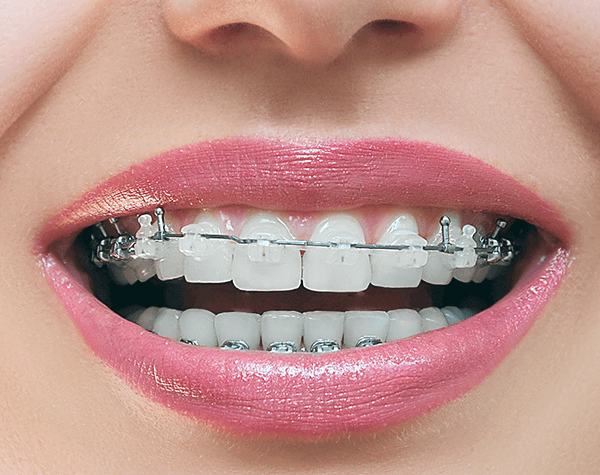
Signature III – Aesthetic fixed braces
At our clinic, on the recommendation of our orthodontic specialists, we offer treatment with the Signature III system among traditional braces, an orthodontic system with excellent aesthetics.
• Bonding it provides ideal conditions for the orthodontist, yet it is easy to remove at the end of treatment.
• The ceramic brackets look stylish and their design provides a high level of comfort.
• The ceramic and clear versions and aesthetic wires are popular choices for adult orthodontics.
• Thanks to the development of modern orthodontics, this method is now faster and more effective than removable orthodontic systems.
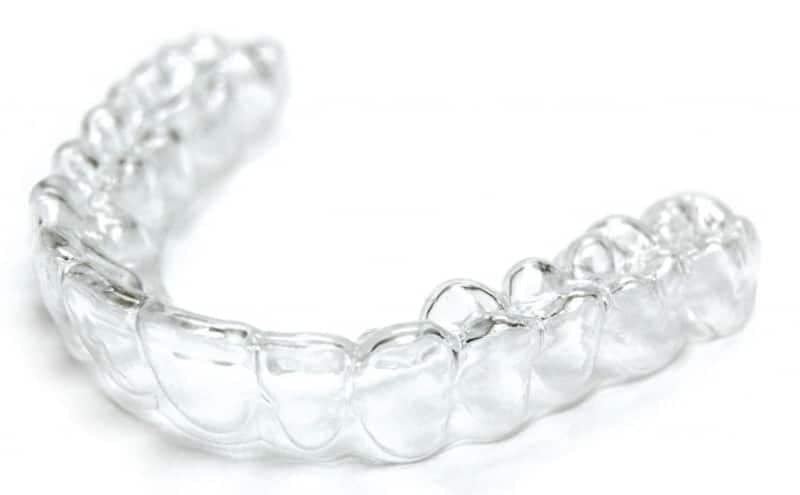
Clear Aligner – removable, invisible braces
Creating a straight smile without worry or lack of confidence? A perfect look and a perfect result without shiny, clearly visible metal braces? The most discreet appliance for adult orthodontics is comfortable and completely unnoticeable.
• Clear Aligner is a popular choice among adult patients, and it is completely invisible when worn.
• The modern appliance contains no metal, and its main advantages come from exactly this: specialists use a special soft, transparent plastic.
• An extremely precise appliance: it fits the teeth perfectly thanks to accurate planning.
• This brace can be removed for eating and brushing, and does not interfere with speech; it is comfortable to wear and easy to clean.
• On the specialist’s recommendation, it should be worn for 20–22 hours a day.
Recommended for you
Recommended for you:
- Clear Aligner orthodontic treatment
- Clear Aligner straightens your teeth discreetly and gives you complete freedom.
- Find out how Clear Aligner treatment works!
Lingual braces as a comfortable, invisible retainer
We do not currently use lingual braces fixed with brackets on the tongue side at our clinic.
However, many people know the retention wire bonded to the inner surface of the teeth, which we use as a retainer, as lingual braces.
• After the external braces are removed, it acts as a kind of inner, aesthetic brace, but in this case there are no brackets on the inner surface of the teeth.
• The wire bonded to the inside is used as a “retainer” that helps the teeth settle in their new position.
• It is comfortable to wear and does not affect speech at all.
Recommended for you
Book a consultation and meet our orthodontic specialists!
Or book by phone:
The orthodontic treatment process – important information!
What happens before orthodontic treatment
• Orthodontic treatment is always preceded by a thorough, detailed assessment, during which our specialist outlines personalised solutions and explains the options clearly.
• Various types of X-rays are needed to create a precise plan, but we can carry out these diagnostic examinations on site.
• Before orthodontic treatment, we remove tartar, fill any decayed teeth, and if necessary our oral surgeon extracts teeth painlessly.
Steps for fitting braces
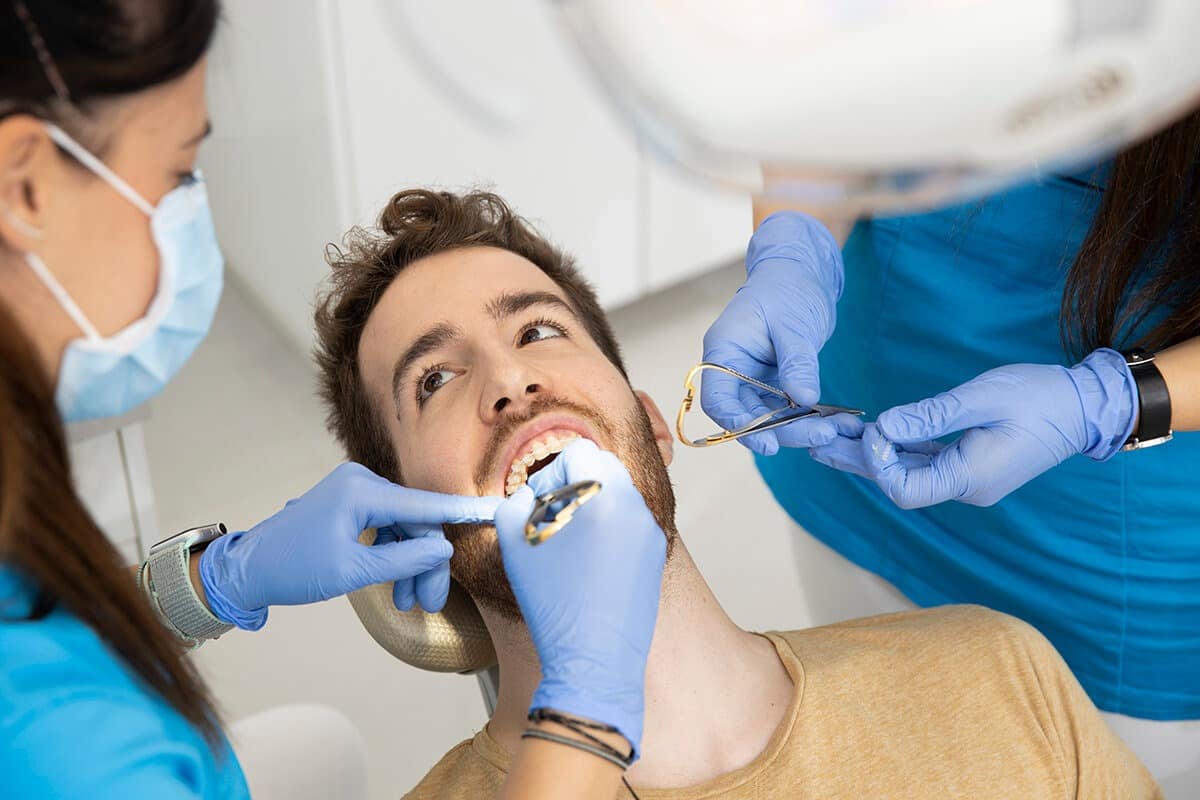
1. The specialist prepares the outer surface of the tooth where the bracket will be placed.
2. The brackets are bonded.
3. The wires are inserted and secured.
4. We give you special oral hygiene advice and a starter dental care kit.
5. We book your next appointment.
Fitting braces, including advice, takes about 1–1.5 hours.
Then the real work begins, which requires patience and attention, and which should not be rushed for the sake of the result!
• Fixed braces stay on the teeth for 1.5–2 years.
• Depending on the type of brace, check-ups are needed every 4, 6 or 8 weeks, when the specialist makes the appropriate adjustments.
• After the fixed braces are removed, a removable (night-time) brace and an inner retainer follow, which must be worn for a few more years so that the result can settle.
Oral hygiene tips for braces
Whatever type of braces you wear, you need to pay particular attention to proper oral hygiene. By strictly following good oral hygiene habits, you can prevent a number of problems later on.
Clinident’s orthodontists and dental hygienists – well-trained, professional experts in Budapest – are happy to help patients not only by fitting braces, but also by teaching them proper oral hygiene.
• During orthodontic treatment, make sure that in addition to a regular toothbrush, you also use tools that can effectively clean the spaces between the teeth.
• The basics of oral hygiene remain the same, but proper brushing and flossing should be supplemented with an interdental brush, so that plaque does not spoil your aesthetic braces.
• With fixed braces, keeping the spaces between the teeth clean is especially important, so that inflammation does not develop there. Inflammation can later undermine the success of orthodontic treatment, meaning that a little carelessness could waste all the sacrifices made for a beautiful smile.
• In addition to orthodontic check-ups, it is also important to attend regular scaling or Guided Biofilm Therapy cleaning.
Orthodontics in Budapest – Consultation, planning and brace prices
It is always worth thinking of orthodontic treatment as a long-term investment. By straightening the teeth – regardless of the appliance – you can achieve much better oral hygiene: the risk of tooth decay, gum inflammation and early tooth loss decreases, as does the need for restorations.
When weighing up the prices of fixed braces, you can basically choose between the most modern, self-ligating Damon braces and the traditional version.
• The self-ligating brace works with gentler forces, is more comfortable and requires fewer check-ups, while the traditional brace is less comfortable to wear and requires more visits, but this does not affect its effectiveness at all.
• Beyond these aspects, both systems are available in an aesthetic and a metal version, so neither choice means giving up on aesthetics.