1133 Budapest, Tutaj u. 6/b, Cézár-Ház
 Opening hours: Mo-Fr 08:00-20:00
 Contact: +36 1 801 2250


Why is a filling a good choice?
With tooth decay, first the enamel and later the dentine is damaged. By removing the decayed parts and filling the resulting hole (the cavity), the process of tooth deterioration can still be reversed at this stage, and the tooth can be successfully restored.
3 reasons to have a filling
1. It is easier to prevent decay or treat it in time
At first, tooth decay shows itself as mild sensitivity, and if we ignore it or don’t have regular check-ups, it can quickly spread deeper, where it may even reach the pulp and cause more serious pain and more work.
2. A faster and cheaper solution than a multi-stage course of treatment
With a filling, the problem can be solved in just 1 treatment without discomfort, whereas if we let the tooth deteriorate further, we can expect more discomfort and more costly treatment.
3. The filling material promises excellent quality, and Clinident aftercare promises long-lasting results
In addition to professional filling materials, we also provide professional aftercare. Instead of conventional scaling, we recommend Guided Biofilm Therapy, the most advanced tooth cleaning available, for lastingly healthy teeth and to prevent decay.
YOU REALLY NEED TO KNOW THIS
Guided Biofilm Therapy is a special tooth cleaning method that removes the bacterial biofilm layer from the teeth, the spaces between them, cracks and grooves; this layer is invisible to the naked eye, yet causes teeth to deteriorate and fillings to fall out and develop decay underneath (secondary caries).
The risks of not having a filling
Many people put off seeing the dentist and cannot believe that it really is more comfortable to treat the problem when the first symptoms appear than later, when the decay has progressed and more drastic methods are needed.
What can you expect if you don’t see a dentist in time?
- If the decay reaches and infects the pulp, only root canal treatment and cleaning of the root canals can provide lasting, symptom-free help.
- Because of neglected decay, part of the tooth may break off, and if this happens unluckily, it may even lead to tooth extraction.
- The bacteria that cause decay cause bad breath and spread infection, so as they spread further they can damage more and more healthy teeth.
- An untreated, decayed infected tooth can cause focal disease in the body.
So it is no coincidence that our dentists always emphasise the importance of annual check-ups, as they help detect tooth decay in time and treat it more cheaply.
Types of fillings and materials – Which one, and when?
Many patients come to us asking for crowns on teeth disfigured by discoloured fillings. They want a tooth with a flawless surface. However, a crown would involve grinding down the teeth, which is not necessarily required to repair decay, as specialists have advanced materials and solutions at their disposal.
Our two most effective and popular methods for treating decayed teeth:
- light-cured aesthetic fillings and
- inlays
Recommended for you
Inlays – Types, materials, prices. Who are they recommended for, and when?
- Types of inlays and their materials
- Who can have an inlay, and in which cases?
What materials can your filling be made of?
Amalgam:
This is one of the oldest types of filling. An amalgam filling is extremely durable, but it turns the tooth grey, and the mercury and other metals it contains can cause physical complaints and allergies, so it may be worth replacing them with aesthetic fillings.
Composite filling:
Its advanced composition allows it to be used in many ways. It can be made quickly in a single dental appointment, and with proper oral care it can last 5–10 years.
- It is a tooth-coloured material that can be used to restore decayed areas.
- It can correct minor shape irregularities of the front teeth.
- It can repair the edge of a chipped tooth.
- It can also be used to make an aesthetic cervical filling to eliminate sensitivity.
Porcelain inlay:
An inlay is a more durable and stronger “special type of filling” than a composite filling, yet a gentler solution than a dental crown.
- Its preparation does not require extensive grinding or loss of tooth structure.
- It is a stronger solution for larger areas of decay or after root canal treatment.
- Inlay, onlay and overlay types are available, which can restore small, medium and large defects, depending on the extent of the missing tooth structure.
The advantages of inlays over composite fillings:
- It looks better, as the tooth surface can be perfectly reconstructed. Its colour matches your own teeth perfectly and does not turn yellow.
- The dental technician makes the inlay based on a precise impression of the prepared cavity.
- It fits precisely, which reduces the chance of secondary decay.
- While it is being made, the teeth receive a temporary filling. The dentist bonds the laboratory-made inlay into place.
- It is more durable, so with proper oral care it can last 10–15 years.
What you should know about porcelain inlays:
- It is unnoticeable, as its shape and colour blend harmoniously with your own teeth.
- Individual chewing surfaces can be shaped better, and it provides a perfect contact point.
- It does not cause allergies.
- It can be made not only of porcelain, but also of dental gold, which is tissue-friendly and antibacterial, so it may be even more durable than porcelain. A refined and aesthetic solution.
- With proper oral care, it can last 15+ years.

How a filling is made and what to do after a filling
1. Panoramic X-ray, diagnosis
In many cases, a decayed tooth is already visible, so diseased teeth are easy to identify. However, if the source of the pain is only roughly known, the dentist will also use a panoramic X-ray to draw up the treatment plan. This not only gives an accurate picture of all the teeth, but can also reveal hidden processes deep inside, or that several teeth are affected.
2. Professional cleaning
Fillings are always made after scaling. Tartar keeps the gums inflamed, and they may bleed during treatment, making it difficult or even impossible to create a perfectly sealed filling.
3. Ensuring a painless procedure
Fillings are made after local anaesthetic, which works quickly, does not put a strain on the body and provides complete pain relief and numbness in the area.
4. Preparation, removing decayed tooth structure
Once the tooth is numb, the dentist removes the decayed parts to create the cavity for the filling.
5. Preparing the cavity, surface treatment
An aesthetic, light-cured filling can be made immediately even for deep, advanced decay; the only difference is that the cavity first receives a lining to seal the sensitive tooth tissue and insulate it. When treating extensive decay, this provides an excellent base for the composite filling.
6. Placing the filling
The filling material is placed in the prepared cavity in layers and hardened with a special UV lamp, filling the gaps. The colour of the filling can be customised so that it matches your own teeth as closely as possible and cannot be told apart from them.
7. Shaping the chewing surface, cusps and edges, adjusting the height
The final step is precisely shaping the chewing surface and polishing. All this so that you can chew comfortably, your teeth close together harmoniously, the filling is not too high, and the new tooth surface feels pleasant to the tongue.
What can make placing a filling difficult?
Every step of making a filling is important and essential for the filling to last and for the tooth to fulfil its function, yet these steps do affect the structure of the tooth, even if only temporarily.
- For teeth that are severely damaged – fragmented, incomplete, filled several times with different materials, greyed by root canal treatment or discoloured by medication – it is much harder to determine the exact tooth colour and to make the filling.
- The tooth dries out during treatment, its colour changes and it becomes more matt, which makes previously unnoticed aesthetic problems more visible: hairline cracks in the tooth, lighter or darker spots. This effect is not permanent; within a few hours or days the tooth rehydrates and the symptoms fade.
- A finished filling may chip or break. This can be caused by grinding your teeth at night, an incorrect bite, or biting on a foreign object. In the case of teeth grinding, wearing a night guard is recommended.
How much does the treatment hurt, and what can you expect after a filling?
Pain during treatment
Thanks to local anaesthetic, you do not need to expect any unpleasant experience while the filling is being made.
Pain immediately after the filling
When the filling is finished, the area will typically remain numb for a few hours, so we recommend avoiding eating to prevent genuinely painful injuries from chewing.
Pain with the new filling
After a filling, the teeth may be sensitive to cold and heat for a few weeks. If severe, throbbing or long-lasting dull pain or swelling occurs, you need to book an appointment immediately. If tooth inflammation develops, the tooth will need root canal treatment.
Pain when chewing
Once the numbness has worn off, it is worthwhile – and necessary – to test the new filling. At this stage there may still be a few thousandths of a millimetre of excess on the surface, which feels like a whole mountain in the mouth and makes eating uncomfortable. If you notice this, ask for a follow-up appointment for adjustment as soon as possible, as constant strain can lead to overloading and sensitivity of the tooth.
Recommended for you
What can you do after a filling for faster healing?
- What care does each type of filling require? What can and can’t you eat? How should you brush?
Clinident fillings, Budapest, District 13 – Prices, guarantee
Filling materials:
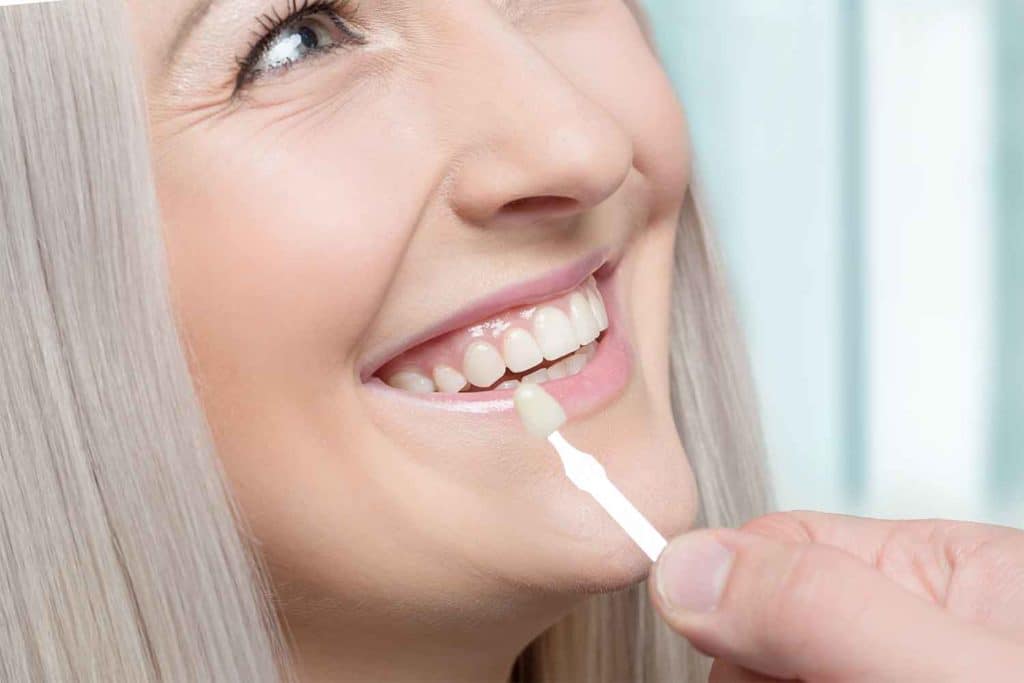
The colour of everyone’s teeth is different and unique. Today’s dental materials make it possible to aesthetically repair even the incisors, which are an essential part of the smile.
A professional filling material is available in many tones and shades, so the restoration can reproduce the tooth colour as accurately as possible. For a tooth with a uniform colour, involving just 1–2 shades, the filling can be made easily and quickly, while in other cases the restoration requires precise work with several shades.
At our clinic, ceramic inlays are made from materials by the Swiss company Vivadent, which ensures the highest quality, while for fillings the dentist uses materials from the Swiss Coltène and Japanese GC dental manufacturers. These renowned companies have long been market leaders and are among the most reliable brands in the dental market.
Why do we recommend fillings made at Clinident?
- Over the past 17+ years, we have performed more than 3,000 beautifully crafted inlay treatments for our patients.
- For root-filled teeth, we always place an inlay instead of a simple filling, so that the saved tooth stays intact for as long as possible.
- An inlay is a durable solution for many years, backed by our clinic’s 100% guarantee.
- The materials used represent the highest European standards.
- During treatment, we always create beautifully crafted, unnoticeable inlays and fillings that perfectly match the colour of the tooth.
- Microscopic root canal treatment in Budapest. For root canal treatment due to advanced decay, you can also choose our most precise procedure, so that your tooth is sure to receive the most advanced treatment and the best possible chances.
- Between check-ups, our dental clinic protects the health of your teeth and the durability of fillings, inlays and onlays with Guided Biofilm Therapy.
Recommended for you
Recommended for you!
- Microscopic root canal treatment – Why is it faster and more successful?
- What are the advantages of microscopic treatment, when is it recommended, and how does it work?
- Which is better value: saving a tooth with microscopic treatment or a dental implant?
YOU REALLY NEED TO KNOW THIS
Decay acquired in adulthood typically starts from the surfaces where teeth touch each other. This is where toothbrush bristles cannot reach, and without floss bacteria multiply. Neighbouring teeth touching at this tiny contact point can therefore even decay at the same time.
How should teeth with fillings be cleaned?
After a new filling, we pay extra attention to careful care for a while, but over time the momentum fades, the effort wanes, and we forget to do some important steps.
- To avoid the next dental treatment, brush at least twice a day and floss once a day.
Filling check-ups and aftercare
So that your tooth never again has to be drilled prematurely because of decay under a filling, be sure to try Guided Biofilm Therapy scaling, which we perform instead of conventional scaling.
- It helps you create professional oral hygiene that lets you say goodbye not only to tartar, but also to the decay that keeps appearing every year.
Recommended for you
Scaling – Which is the most comfortable in-surgery treatment?
- The benefits of scaling with biofilm removal
- How cleaning with biofilm removal works
What guarantee applies to fillings, and how?
- We always provide a guarantee on aesthetic composite fillings made at our clinic.
- If its colour or shape still does not seem right after a few days, you can have it corrected with your dentist.
- If you have a problem with the filling or feel pain after treatment, let us know immediately, so that the dentist can give you and your tooth the right help at the right time.
How much does a filling cost at our clinic?
Aesthetic filling prices and treatment details are available by clicking here, or in the price list menu.