1133 Budapest, Tutaj u. 6/b, Cézár-Ház
 Opening hours: Mo-Fr 08:00-20:00
 Contact: +36 1 801 2250


What is tartar, and who is it dangerous for and why?
Plaque builds up on your teeth when you eat. Its formation is natural and continuous, which is why it can only be removed by regular and very thorough brushing.
From plaque to tartar. This is how it happens:
1. Bacteria in plaque dissolve minerals found in saliva (phosphate, calcium).
2. During this process, the plaque hardens completely.
3. The hardened, calcified plaque adheres firmly to the surface of the teeth or crown, so you can no longer remove it with a toothbrush, floss or any other home method.
YOU REALLY NEED TO KNOW THIS!
While tooth decay attacks the enamel and dentine (and later the pulp), the yellowish-brown tartar that sticks to your teeth primarily targets the supporting tissues.
Unlike tooth decay, tartar can form not only on your own teeth, but also on various restorations – and it does.
So tartar that is not removed can be dangerous for anyone, especially if we have also inherited a predisposition to gum disease.
Recommended for you
Which specialist consultation should you choose?
- The most important information, from booking to arrival.
- Get to know us and choose your dentist.
- Recommended for you:
- Your first consultation at Clinident Dental Clinic
Apart from predisposition, however, certain cases are worth highlighting separately, as they require extra attention:
- Expectant mothers: pregnancy-related gum inflammation can quickly worsen if oral hygiene is poor, there are no dental check-ups and no scaling. This neglect may be the origin of the old saying “one child, one tooth”.
- People with diabetes: unfortunately, few people know that gum disease often accompanies diabetes, and without regular dental check-ups, diabetes can indeed lead to tooth loss.
- Smokers: the harmful substances in cigarettes dry out the mucous membranes and keep them constantly inflamed, reducing their resistance to bacteria. So cigarettes are responsible not only for bad breath, but also for gum disease.
What causes tartar? Plaque, and what lies behind it!
In addition to poor oral hygiene, genetic factors can also speed up tartar formation. It most often forms on the inner, tongue-side surface of your teeth, or on the outer surface near the salivary glands.
It is most often found on these teeth:
• premolars and molars
• upper side teeth
• lower front teeth
• incisors and canines.
Tartar is very visible, so it is easy to recognise, as it forms a yellowish-brown layer on your teeth and between them.
Although the aesthetic problem may be bothersome, it is even more important that tartar that is not removed will cause gum inflammation over time.
It is important to know that in addition to poor oral care, the formation of calcified plaque can also be encouraged by the following factors:
• smoking,
• reduced saliva production,
• poorly sealed fillings, crowns or bridges
• or crowded teeth.
In the last two cases, cleaning the teeth can become difficult, so plaque is more likely to remain there and turns into tartar more quickly.
Tartar, which spoils the overall appearance, becomes unpleasant not only because of painful gum inflammation, but also because it causes strong bad breath.
Recommended for you
Which vitamins can help prevent gum inflammation?
- How do you make the best homemade mouthwash?
- How can you relieve gum inflammation immediately?
- Recommended for you:
- Tips and herbs against gum inflammation
How can you tell if you have gum inflammation?
One of the most insidious features of tartar that is not removed is that over time it starts to irritate the layer of gum that protects your teeth and periodontium.
So stand in front of the mirror and take a look! What do you see?
1. What colour are your gums?
• Gum inflammation is caused by toxins produced by bacteria multiplying in tartar, which turns the gums purple or bluish-red.
2. Do your gums bleed when you brush? Have you noticed bleeding before?
• With gum inflammation, the irritated gums react by bleeding when you brush.
3. Is brushing uncomfortable, and are your gums sensitive or even painful?
• Most importantly, despite the discomfort, you must not neglect brushing. It is important to know that it doesn’t hurt because you brush – it hurts because you don’t brush thoroughly enough.
YOU REALLY NEED TO KNOW THIS
Although you may feel pain, patients often report that their gum inflammation was not accompanied by obvious symptoms, which is why they did not see a dentist in time. So the signs are not always easy to spot at home, which is why it is good to always pay attention to ourselves. With regular dental check-ups, gum inflammation detected in time is still easy to treat.
What can you expect if you don’t have your teeth scaled?
Ultrasonic scaling is carried out routinely and professionally by our specialists, who know that all it takes to prevent dental problems is removing built-up tartar and maintaining proper oral hygiene.
It follows from this that skipping scaling can carry serious risks:
• The ever-growing layer of tartar that irritates your gums attacks the supporting tissues of your teeth and, penetrating the periodontium, causes serious disease and irreversible destruction.
• This is called gum disease, which, alongside tooth decay, is one of the most common causes of tooth loss in adults.
• At this stage, medical help and the expertise of a periodontist will be needed to save the teeth.
• According to some estimates, gum inflammation may affect as much as ¾ of the Hungarian population.

What does scaling involve?
Tartar that has built up on the teeth and irritates the periodontium can only be removed by a specialist under professional conditions, using special instruments. So a dental hygiene treatment basically consists of two parts:
• scaling (depuration) and
• polishing.
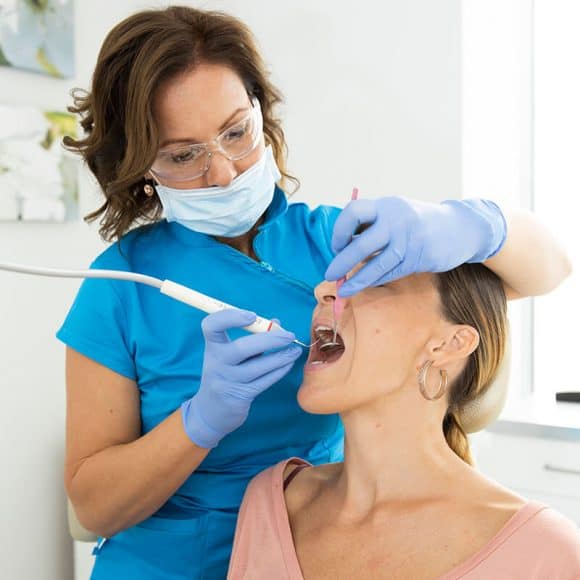
1. For scaling, we use a modern ultrasonic instrument that gently but effectively cleans the tooth surfaces. The ultrasonic scaler does not injure the gums, but the vibration it creates breaks down tartar quickly and effectively and removes plaque and deposits stuck to the teeth.
2. To clean the areas below the gum line, however, we use hand instruments for more effective results.
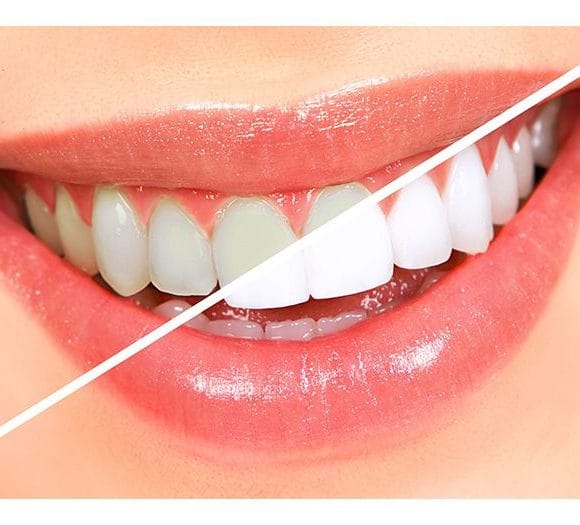
3. Scaling followed by salt polishing can bring significant aesthetic improvement, and your teeth may even be several shades whiter once the yellowish-brown plaque has been removed.
Recommended for you
Scaling – Which is the most comfortable in-surgery treatment?
- Scaling with biofilm removal – Its advantages
- How special Biofilm Therapy scaling works
How much does scaling hurt?
The treatments are usually completely painless, and most patients experience no discomfort at all.
- Those whose teeth are generally more sensitive, or who have a large amount of tartar built up on their teeth, may react more sensitively to removal.
- The good news is that even they don’t have to put up with discomfort, as anaesthetic (gel, spray, injection) can quickly relieve any degree of sensitivity.
Why choose dental hygiene treatment at Clinident Dental Clinic
- At our clinic, ultrasonic scaling is carried out with a local anaesthetic gel so that the treatment causes you as little discomfort as possible.
- Instead of the traditional procedure, we perform gentler and more effective ultrasonic scaling, which is quick and exceptionally thorough.
- Scaling is carried out by our kind and thorough dental hygienists, who have many years of experience.
- At our clinic you can also choose a comprehensive treatment that includes oral hygiene advice, so you can ask for not only theoretical but also practical help with thorough brushing and using various tools.
- You are in safe hands with us! At the slightest sign of gum disease, we provide personalised periodontal care on site.
Oral hygiene advice: keeping your smile healthy at Clinident
You can more or less prevent tartar from forming yourself; paying attention after scaling can greatly improve your oral hygiene, and we give you all the effective help you need.
5 tips against tartar – become a prevention pro
1. Correct brushing
Learn the right cleaning technique for your teeth. Tooth surfaces particularly at risk from plaque:
• the inner surfaces of the teeth,
• the spaces between the teeth,
• the parts where teeth touch each other (contact points),
• and the grooves of molars and premolars.
2. Maintaining proper oral hygiene
The basis of this is brushing at least twice a day, plus using floss and interdental brushes.
• If you skip flossing before bed, you are not cleaning 33 per cent of your tooth surfaces at all. This leads to tooth decay and tartar formation.
3. A healthy lifestyle – zero sugar
A healthy diet plays a key role in maintaining proper oral hygiene, so don’t smoke, and eat healthily! Consume less of anything that can stain your teeth (coffee, fizzy drinks, red wine) or contains sugar! Instead, eat more dairy products with live cultures!
4. Regular dental check-ups every 6 or 12 months
You should attend check-ups as instructed by your dentist. If your oral hygiene is not adequate or certain teeth need closer monitoring, the dentist will recommend more frequent visits.
5. Scaling at least once a year
In addition to regular scaling, it is also important to use the right toothpaste and mouthwash for you, and a manual or electric toothbrush suited to your dexterity, for oral care at home. Our dental hygienist can give you practical advice on all of this at our clinic.
Recommended for you
Teeth whitening methods from A to Z
- All the whitening products you can use at home, from whitening powder to UV lamps.
- How should they be used?
What discomfort can occur during or after scaling?
With this procedure, you should not expect any serious difficulties. Dental hygienists carry out the treatment quickly and routinely, yet precisely and gently.
It is important to tell the dental hygienist before treatment if:
- you have a pacemaker, because in this case tartar can only be removed with hand instruments,
- you have a dental implant, because tartar on those teeth can also only be removed with a special hand instrument, so as not to damage the implant.
Symptoms during and after removal typically occur if you have not had thorough scaling before, or have neglected treatment for a long time.
During scaling, in addition to sensitivity, the following may also occur:
- if the gums are inflamed because of a lot of tartar, they may bleed heavily when it is removed, but there is no need to be alarmed – by the time the treatment ends, the bleeding will have stopped.
After scaling, the following may occur:
- An old, poorly sealed filling with decay underneath may fall out or break.
- The edge of an outdated restoration or a crown with cracked porcelain may chip off.
- Enamel may chip off a damaged tooth or a root-filled tooth.
- After removing a large amount of tartar, the teeth may be sensitive.
- With untreated gum recession, teeth may become loose after scaling, as the tartar causing the inflammation has caused the supporting apparatus, the bone, to recede. In such cases, our colleagues recommend periodontal examination and therapy.
YOU REALLY NEED TO KNOW THIS!
It is important to know that an ultrasonic scaler cannot damage a healthy tooth, a good-quality, well-sealed filling or a proper restoration. The symptoms mentioned above occur when the tooth is weakened, or the filling or restoration needed repair or replacement anyway.
This page was reviewed by: Dr. Péter Czigler, chief medical officer