1133 Budapest, Tutaj u. 6/b, Cézár-Ház
 Opening hours: Mo-Fr 08:00-20:00
 Contact: +36 1 801 2250

What should you do if you need urgent treatment and immediate pain relief?
When in pain, many people look to toothache medication for a solution, hoping that once the pain goes away, they will not need a dentist either. Unfortunately, there is no medicine that can heal a tooth without dental treatment. When a tooth hurts, it signals a specific problem and immediate dental treatment is needed! Sometimes the pain stops after a while, but that does not mean the problem has been solved or the tooth has healed. In many cases, it indicates that the tooth is dying, which allows chronic complications to develop.
These are the most important steps to take if you have toothache:
1. Occasional, sudden pain that quickly goes away on its own
The solution:
- You need to book a dental assessment!
- When booking, mention that although you have symptoms, you do not need medication for them.
- Until your appointment, avoid very cold and hot foods and sweets!
- When brushing your teeth in the evening, use interdental brushes and floss everywhere! Be very thorough!
2. Constant, persistent pain that also requires painkillers
The solution:
- You need not only painkillers, but a dentist too!
- Book an appointment immediately and tell them your tooth hurts, so they know you need an emergency appointment and treatment. Your problem cannot wait!
- Putting it off and waiting is not a good strategy; it only leads to more pain and more complications.
- Be extremely thorough when brushing in the evening, always use floss and interdental brushes, and do not overdo the medication.
- During the day, try herbal mouthwashes, salt water rinses and cold compresses, and save painkillers for the night, before going to bed.
3. Throbbing pain that no longer responds to medication
The solution:
- Call for an appointment immediately! Look for a well-equipped dental clinic with several dentists, as they are more likely to be able to give you an emergency appointment, even within hours. Your problem requires immediate treatment!
- Until your treatment, switch to a different painkiller. If you have been taking the same medicine for days, try another one, and ask your pharmacist for help!
- Very thorough brushing, frequent salt water rinses and careful icing!
Your first visit? This is how a dental assessment works at our clinic
1. On your first visit, you will need to fill in a registration form at reception, where in addition to your personal details you answer health-related questions that are important for dental treatment (e.g. allergies, high blood pressure, diabetes).
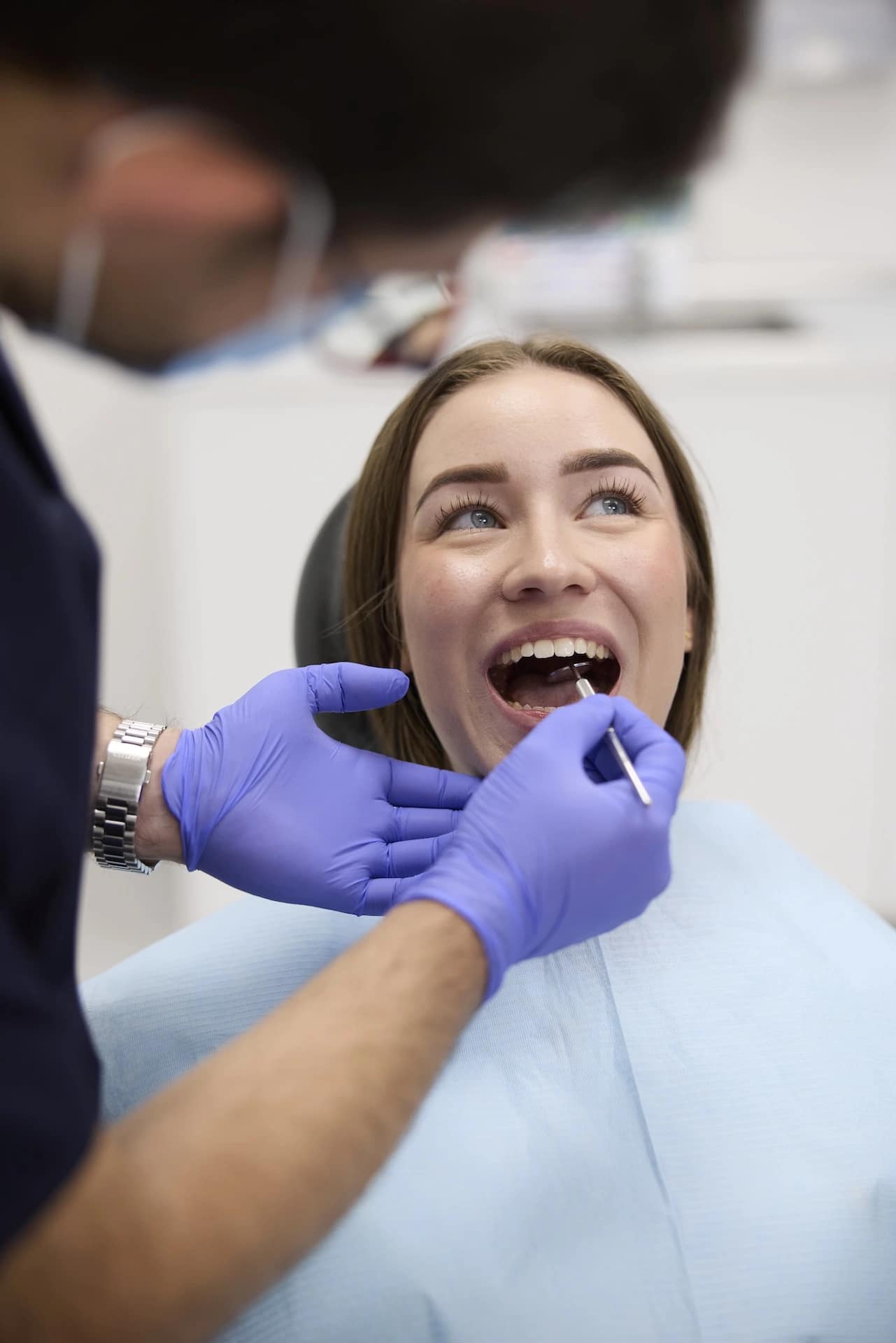
2. The dentist then listens to your dental problems and wishes, and carries out the necessary examinations.
What does the dentist examine?
- They look for tooth decay,
- check for signs of gum inflammation, tartar and gum pockets,
- examine the condition of the wisdom teeth,
- assess the nature of any missing teeth,
- and check the condition of the oral mucosa and any changes to it.
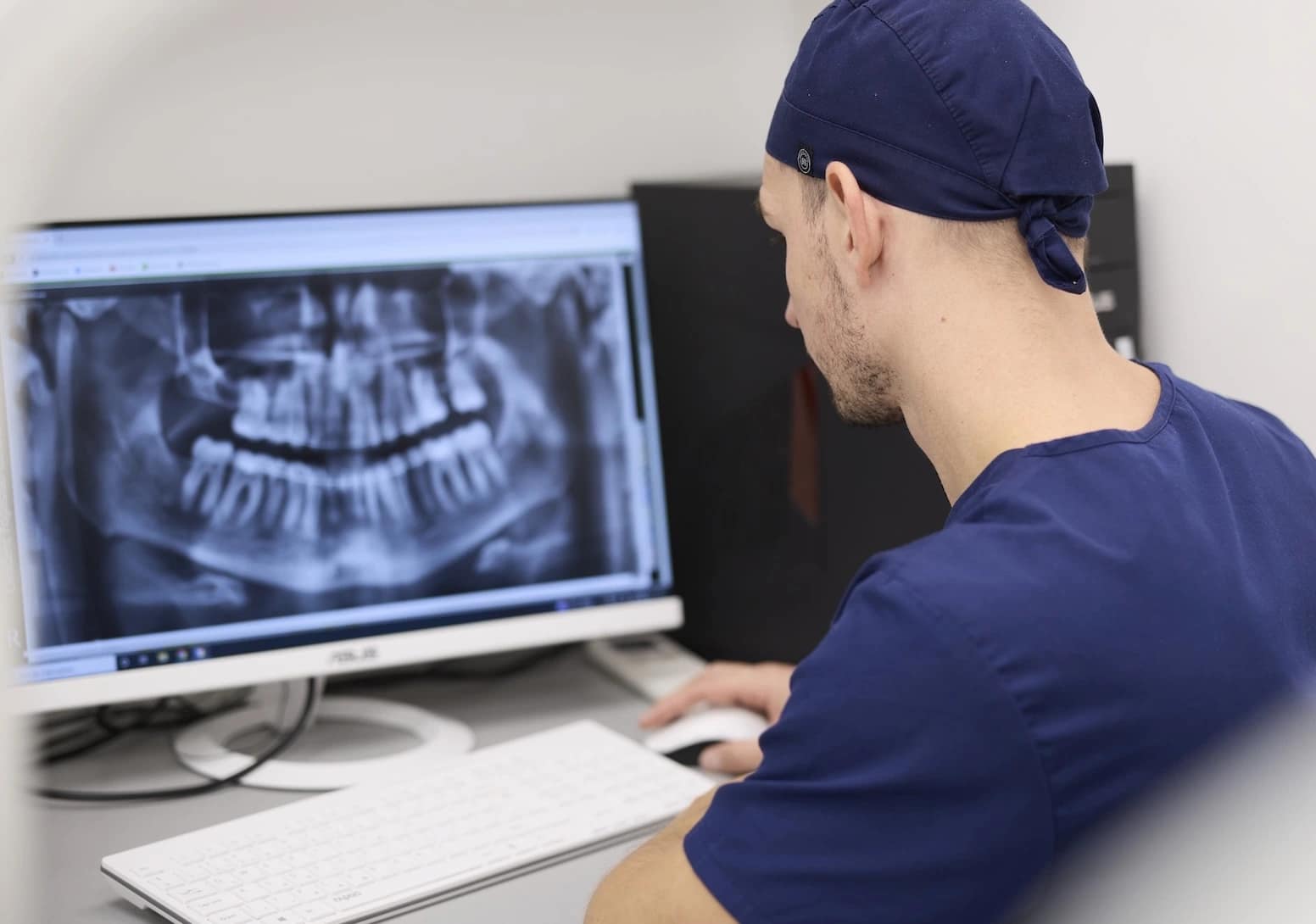
3. The manual examination is complemented by a digital dental X-ray, which provides information about chronic processes that cannot be seen with the naked eye.
4. The current, baseline condition of your teeth is recorded in your digital patient file, and taking into account the wishes you expressed earlier, the dentist draws up a treatment plan.
Searching for dental foci of infection: we find the cause of mysterious symptoms!
Dental foci of infection mainly occur in patients who do not have regular dental check-ups once or twice a year, do not have professional scaling, and whose oral hygiene is neglected. In such cases, bacteria from the focus travel unhindered through the bloodstream to other parts of the body and other organs.
- Patients who have had regular check-ups in the past, but have never been examined with a panoramic X-ray, may also find they have an infected tooth.
- The presence of an infected tooth may be indicated by mysterious physical symptoms for which a doctor can find no other explanation, such as hair loss, joint inflammation, heart problems, etc.
- A focus of infection can also develop on teeth that have previously had root canal treatment, if remaining bacteria have caused chronic inflammation.
What to do to prevent an infected tooth from developing
Many patients are not aware that it is also important to monitor root-filled teeth, implants, fillings and restorations.
Most dentists agree that a check-up every 6 months would be ideal for everyone, so that the dentist can treat an emerging problem in time, before it develops into a pathological process.
- So if you have already had several treatments, such as root canal treatment, a crown or a dental implant, it is best to have a check-up every six months and have your tartar removed once or twice a year.
- If, apart from a few fillings, your teeth are basically healthy and you have not had any major treatment yet, have a check-up once a year to maintain this good condition and reduce the chance of a dental focus of infection developing.
Treatment plan and dental consultation with a specialist
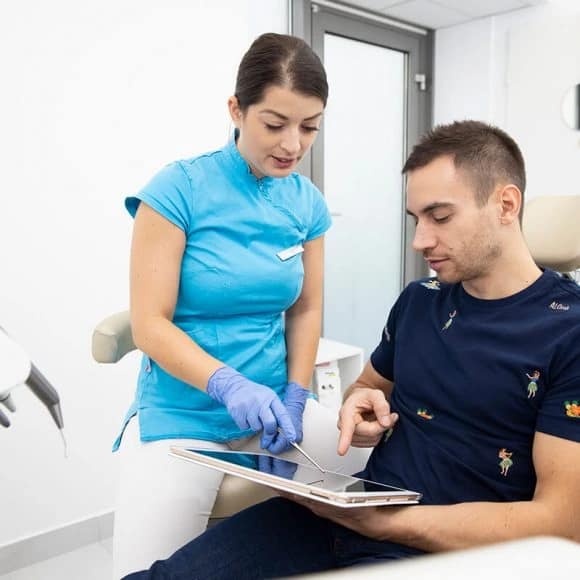
During the assessment, the dentist gets an accurate picture of the condition of your teeth and dental arch, so they can draw up a detailed, step-by-step, transparent treatment plan. It may also turn out that other specialists, such as an oral surgeon, periodontist or orthodontist, will need to be involved to carry out the plan.
- In this case, in addition to the assessment, a specialist consultation will also take place. You will also need to meet the specialist who carries out the relevant procedures at Clinident.
- When planning complex cases involving several fields, a joint consultation may also be held. In such cases, the best solution is reached by aligning the specialists’ professional views with the patient’s wishes and requests.
- The treatment plan is finalised based on the jointly agreed criteria. It details the necessary procedures, the associated treatment prices, and how many visits and how much healing time the whole process will require.

What specialist consultations are available at Clinident?
Our dedicated and highly qualified team covers every field of dentistry, so however complex your treatment plan, we provide everything in one place, quickly and conveniently:
- Conservative dentistry: scaling, and following the general dental assessment, fillings, root canal treatment and professional tooth preservation;
- Cosmetic dentistry: natural, lifelike porcelain crowns, dental bridges and cosmetic smile-enhancing restoration options;
- Smile design: design your dream smile and find out in advance what you will look like with your new, finished restoration.
- Gnathological approach: restorations are made with precise adjustment of the bite, so that the jaw functions harmoniously.
- Periodontology: treatment of gum recession and prevention of tooth loss with periodontal care;
- Professional surgical procedures: oral surgery and implantology – dental implant placement;
- Orthodontics: traditional and aesthetic braces and discreet, invisible, removable clear aligner treatments for adults;
- Paediatric dentistry: preventive orthodontics and paediatric dental care from the appearance of the first baby teeth to the period after the change of teeth.
Modern treatments in District 13 – Innovative technologies at our dental clinic
Modern, painless treatments are now available to everyone, and they often mean faster healing, shorter treatment times and fewer appointments. Technological progress and digital dentistry are not just for show: they ensure maximum precision and raise any dental treatment to a professional level, from fillings and impressions to oral surgery.
Digital X-ray, 3D CT – For detailed and precise planning
Thanks to digital technology, only a fraction of the radiation of old, conventional X-ray machines is needed to take an image, so we get a perfect image safely, with minimal X-ray exposure.
Types of digital radiological examinations available at Clinident Dental Centre:
- intraoral X-ray
- panoramic X-ray
- cephalometric X-ray
- 3D dental CT
Thanks to digital technology, the image is ready in a few seconds and appears immediately on the dentist’s computer, and it can even be copied to a storage device so you can take the results with you.
Digital smile design – A smile that suits you
A cosmetic dentistry consultation can help if you are still unsure and cannot decide which solution to choose to improve your teeth.
- During the consultation, solutions are outlined that not only make your teeth more beautiful, but also ensure they function perfectly. After all, it is not only good to show them off, but to use them too.
- During smile design, we review every possible variation, so based on photos taken of the patient we make the result visible in advance, avoiding any misunderstandings.

Guided Biofilm Therapy (GBT) – The new generation of oral hygiene treatment
Guided Biofilm Therapy (GBT) is a gentle yet highly effective professional tooth cleaning method that specifically removes the bacterial biofilm matrix that causes inflammation.
- The first step of the treatment is plaque disclosing with a special dye, which makes the bacterial layer visible so that cleaning can be truly effective.
- GBT gently cleans the teeth, the spaces between them, hard-to-reach areas, surfaces below the gum line and implants too.
- As it does not damage the enamel or gums, it can be used regularly to prevent and treat gum disease as part of periodontal therapy.
- The procedure is especially recommended for sensitive teeth, for people with implants, for those wearing fixed braces or after cosmetic treatments.
Microscopic root canal treatment – A tooth’s best chance of full recovery
During microscopic root canal treatment, the dentist works with a special dental microscope at many times magnification, so even details invisible to the naked eye can be revealed.
- This is especially important for accurately cleaning and treating complex root canal systems, branches, and narrow or blocked canals.
- Thanks to greater precision, the success rate of the treatment increases, and the risk of losing the tooth is significantly reduced.
- The microscopic technique makes it possible to save a tooth even in cases where conventional root canal treatment might not deliver a lasting result.
- This method helps in the long term to preserve your own tooth, avoiding extraction and the need for a restoration.
Digital impressions – The most innovative tool of modern dentistry
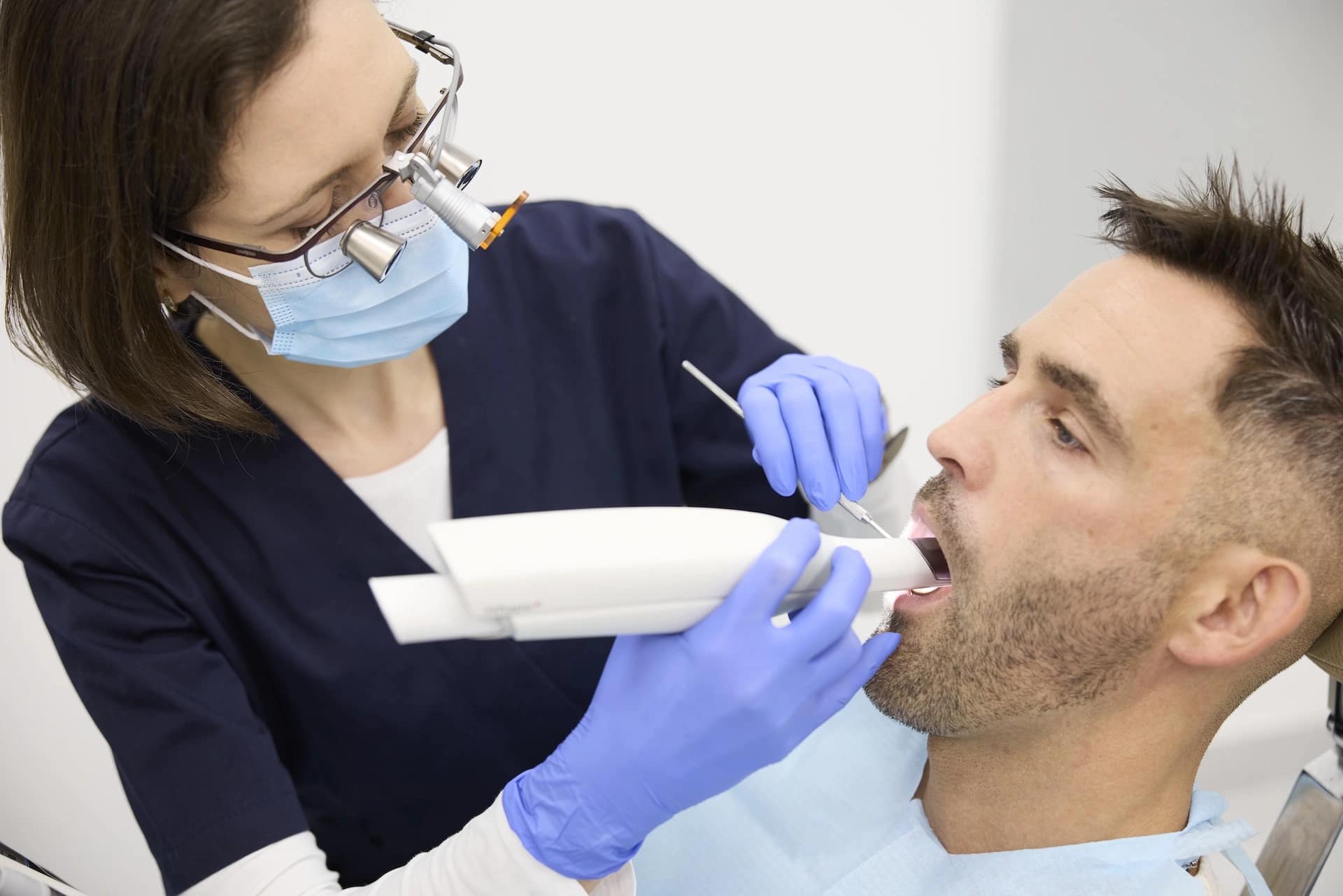
Digital impressions taken with a special intraoral scanner provide an accurate 3D image of the teeth and oral cavity. This technology is faster, more comfortable and much less unpleasant for patients than traditional tray impressions.
The digital data can be sent to the dental laboratory immediately, so restorations, aligners or braces can be made faster and more accurately. The digital file is easy to store and clearly documents the initial condition.
This page was reviewed by: Dr. Péter Czigler, chief medical officer