1133 Budapest, Tutaj u. 6/b, Cézár-Ház
 Opening hours: Mo-Fr 08:00-20:00
 Contact: +36 1 801 2250

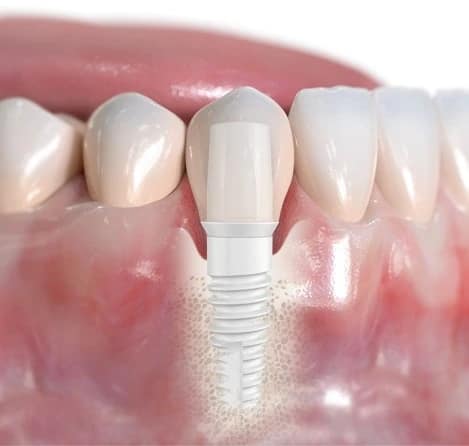
Types of dental implants
Dental implants are one of the most stable and durable solutions in modern dentistry for replacing missing teeth. They provide a fixed, aesthetic restoration without grinding down your own teeth.
1. By loading:
- Conventional loading: the implant is loaded and the restoration made after the osseointegration period
- Immediate loading: the implant is loaded a few days after placement. Unfortunately, this is only rarely a lasting and safe solution.
Recommended for you
In certain cases, the implant can be placed at the same time as the tooth is extracted. Our detailed expert guide to the possibilities and conditions of immediate implantation explains when this faster implant solution can be used.
2. By design:
- One-piece implant: A one-piece implant is not separate from the abutment and extends above the gum after placement. One-piece implants are relevant for placement in dense, thick jawbone.
- Two-piece implant: With a two-piece implant, the implant and abutment are separate; after placement, the artificial root may receive a cover screw, or even a healing abutment, for the healing period. If it receives a healing abutment, this is a single-stage implant placement, meaning only one operation is needed.
3. By material:
- Titanium implant: Made from high-purity medical titanium, a material compatible with the body to which the surrounding tissues respond well. It integrates well with bone, is safe and tissue-friendly
- Zirconia implant: Zirconia ceramic is biocompatible and also metal-free, so it can be an alternative for those looking for a biocompatible solution because of a metal allergy. It is suitable both for replacing front teeth and for precise restoration of the chewing zone.
Recommended for you
Metal-free implants are an increasingly popular alternative to traditional titanium implants. Our detailed guide to biocompatible zirconia implant placement explains when this solution is recommended and what advantages it offers for replacing missing teeth.
Dental implants in Budapest
At our clinic we only place excellent, premium-quality implants:
Advantages of dental implants
A dental implant is a screw-like artificial root which, once healed, stands as firmly in place as a natural tooth.
It avoids the need for a dental bridge, which requires grinding down your own teeth, or for partial or full dentures.
- It replaces a complete tooth without grinding down other, healthy teeth.
- A versatile method that allows various restorations to be made.
- Stable. It prevents bone loss and provides natural chewing function.
- It looks aesthetic and lifelike.
- It is a long-term solution that significantly improves quality of life.
- A safe and popular technology – hundreds of thousands of patients around the world choose this solution every year.
5 cases where implant placement is a reliable solution
1. Instead of a traditional bridge: The teeth next to the gap can be preserved without being ground down, and bone loss can be prevented.
2. Instead of a partial removable restoration, for missing teeth at the end of the row: If the molars at the end of the row are lost, a traditional bridge cannot be made, only a removable restoration, as there are not enough abutment teeth for a bridge.
3. Instead of dentures and denture adhesive: By placing 2–4 implants, a fixed denture can be securely attached, and adhesive is no longer needed.
4. For complete tooth loss: With 6–8 implants, a completely fixed bridge can be made. The patient can live a full life without compromise.
5. For congenitally missing teeth or tooth loss in adulthood: The problem can be corrected with implant placement instead of orthodontic treatment.
What complications can missing teeth cause?
- Neighbouring teeth drift, and opposing teeth over-erupt.
- The shifting teeth become overloaded.
- Bone loss can be expected where the tooth is missing.
- Chewing habits change, and digestive problems may occur.
- Facial expression and appearance change. Extensive tooth loss can age your appearance by decades.
- Missing teeth can cause speech and pronunciation problems.
The dental implant placement process
Implantation consists of several consecutive steps.
- Oral surgery consultation and diagnostics
- Preparation
- Implant placement
- Wound closure
- Healing period (3–6 months)
- Making the restoration
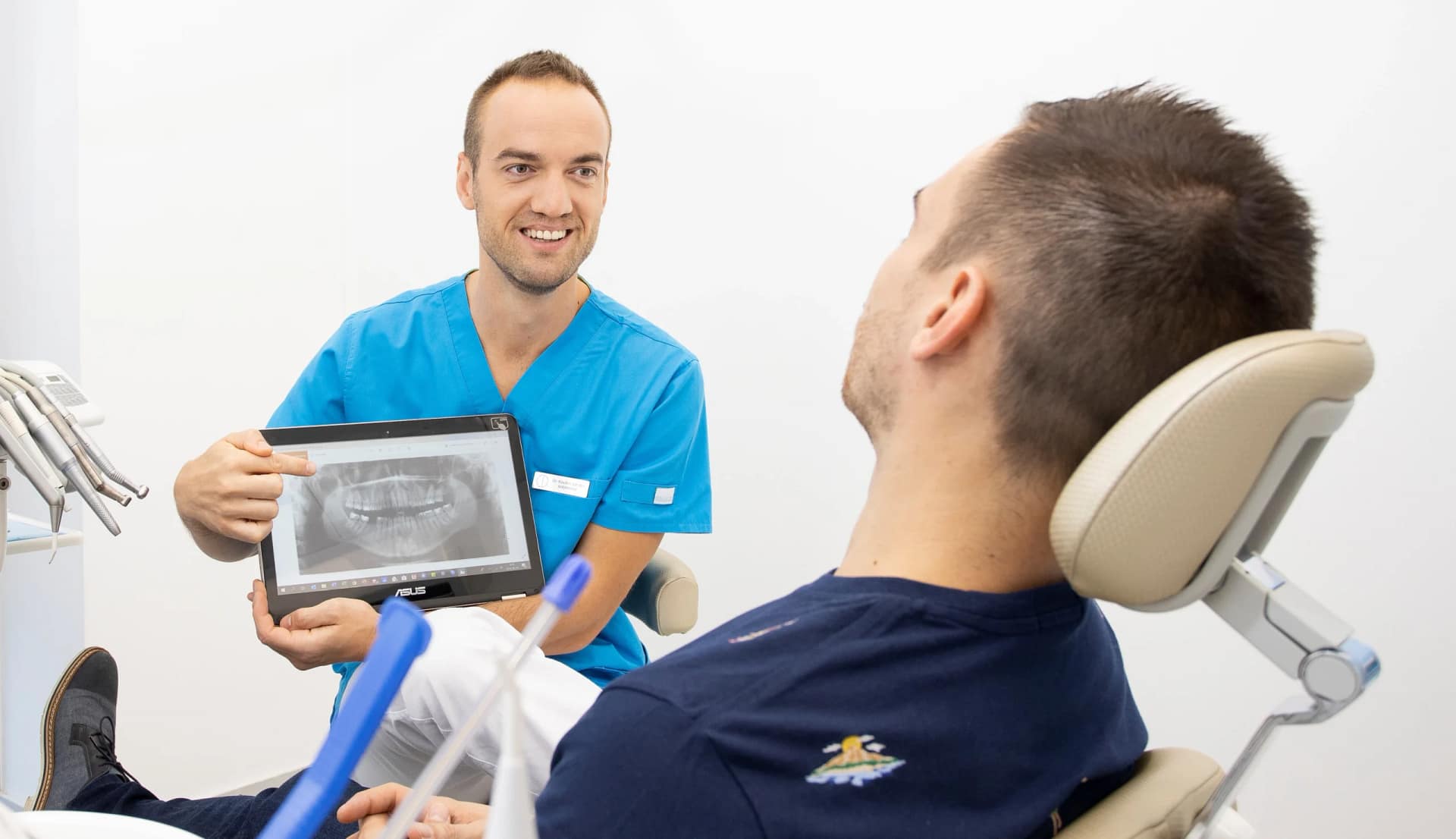
1. Implant consultation with the oral surgeon
The most important questions affecting treatment vary from person to person, so the personalised treatment plan is drawn up after answering them:
- Which treatments need to be carried out before implant placement?
- How long should you wait after extraction before placing the implant?
- Will bone grafting be needed?
- Which implant is most suitable for replacing the patient’s teeth?
- In the case of complete tooth loss, how is the price of an individual full-arch implant solution calculated?
2. Preparation
- The surgery is carried out under local anaesthetic, based on a panoramic X-ray and/or 3D CT scan.
- The procedure takes place to a high standard in a comfortable dental operating theatre equipped specifically for oral surgery, under sterile conditions.
3. The procedure
The completely painless routine surgery takes about 1 hour (for placing 1–3 implants)
- As a first step, our oral surgeon makes an incision in the mucosa, then uses a special surgical drill to create the bone socket where the artificial root will be placed.
- If implantation can be done at the same time as bone grafting, the operation takes longer, while in the case of more significant bone loss this usually means two separate procedures.
4. Wound closure
For a simple implant placement with good oral hygiene, the surgeon places a healing abutment in the implant body straight away instead of a cover screw, which helps create a beautiful, aesthetic gum contour.
- In this case, the surgeon closes the wound edges around the healing abutment protruding from the implant. This means that no new incision needs to be made in the gum later, before work on the restoration begins.
- However, when implantation is carried out at the same time as bone grafting, the implantologist places a cover screw in the implant and closes the wound edges over it.

5. Healing – check-ups
During the healing process after implant surgery, known as osseointegration, the implant fuses firmly with the jawbone. A few check-ups will be needed during the healing period to monitor this.
- After the procedure, a panoramic X-ray of the implant is taken to document the initial condition.
- After surgery, an appointment is booked for stitch removal, usually after 10–12 days.
- The oral surgeon determines the further check-up appointments and healing time.
Restoration after the healing period
Making the restoration and loading the implant, when an abutment and crown are placed on it, can usually begin 3–6 months after placement.
An implant-supported restoration consists of three main parts:
- implant body – the artificial root placed in the bone
- abutment – provides the connection between the implant and the crown
- restoration (crown, bridge, fixed denture, prosthesis) – the visible tooth
Depending on the nature of the tooth loss and the patient’s health, several implant solutions are available.
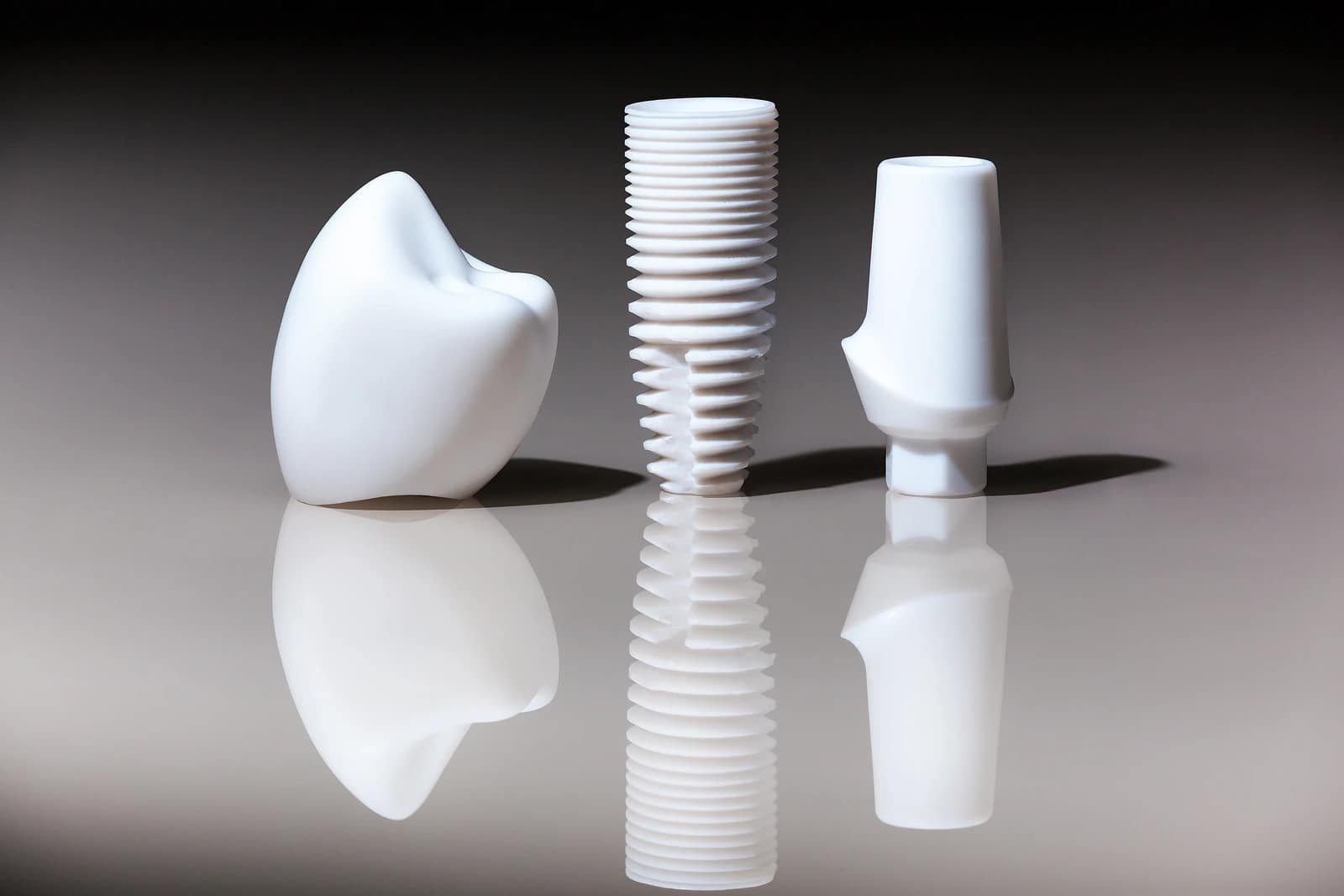
1. A crown for a single missing tooth: If only one tooth is missing, it can be replaced elegantly and discreetly with a single zirconia crown made on an implant.
2. A bridge to replace several teeth: If several teeth are missing, a porcelain dental bridge fixed on implants can be made.
3. For complete tooth loss:
- A full-arch bridge prosthesis screwed onto several implants can be made. This is a modern alternative to dentures that only the dentist can remove. It gives you complete freedom, without restrictions or compromises.
- With fewer implants, a removable fixed denture can be made. The removable denture attaches to the implants, making the resulting fixed denture even more stable; it doesn’t move around on its own, and denture adhesive is no longer needed.
Patient guide before dental implant placement
When can a dental implant be placed?
There are 3 basic requirements for placing a dental implant:
1. Good-quality bone where the old tooth was, in the affected surgical area.
2. Generally good health.
3. Proper oral hygiene.
In which cases can an implant NOT be placed?
If any of the following applies to the patient, the oral surgeon will give detailed information about what to do and the options at the implant consultation:
- Insufficient bone volume
- Poor oral hygiene
- Drug and alcohol dependence
- Heavy smoking
- Blood disorders
- Severe (untreated) diabetes
- Cancer
- Chemotherapy
- More severe bite abnormalities
So our dentists always perform surgery in a clean, inflammation-free mouth with good oral hygiene, to prevent post-operative complications.
In most cases, however, this requires preliminary treatments such as:
- scaling,
- tooth extraction,
- fillings,
- root canal treatment or
- treatment of gum inflammation.
How painful is implant placement?
The surgery is carried out under local anaesthetic, so you should not expect any pain.
- As for pain after implant placement, you can usually feel the “surgical site” for 1–2 days, which many people find bearable even without medication.
- Healing can easily be managed with the antibiotics prescribed by the dentist and toothache medication (e.g. ibuprofen or diclofenac-based painkillers).
- Rest is recommended on the day of surgery, but the procedure does not really require several days of recovery at home.
What can make dental implantation difficult?
Placement requires sufficient bone volume. An implant can only last if its surface is completely surrounded by jawbone. It is important to know that bone grafting is a somewhat more extensive procedure, as the deficient area first has to be filled with bone graft material to make it suitable for implantation.
How long until I have a tooth again?
A dental implant placed in the bone fuses with the bone in about 3–6 months, and thanks to this unbreakable bond it can bear load.
- Depending on the size of the work, the restoration is usually ready in about 14 days.
- If the missing tooth is in the smile zone, the patient receives an aesthetic temporary restoration for the healing period.
Dental implant prices and guarantee, Clinident, Budapest, District 13
What guarantees the success of dental implant placement?
- Oral surgery experience: Implant placement and oral surgery are carried out by our specialists with international experience.
- Professional equipment: Our clinic specialises in implant surgery and making aesthetic restorations.
- Digital planning: Surgical procedures are preceded by a professional consultation and 3D digital planning.
- A holistic approach to patient care: We treat the health of the teeth and mouth holistically, and eliminate surgical risk factors by searching for foci of infection.
- Professional oral hygiene service: For professional cleaning of implants and restorations, we offer Guided Biofilm Therapy instead of conventional scaling
A lifelong investment in your health
With good oral hygiene and regular dental check-ups, an implant can last a lifetime, so it is worth thinking of the costs as a long-term investment in your health.
- A full, high-quality life without compromises or sacrifices.
- The complications and side effects of missing teeth can be avoided.
- If more teeth are lost, an existing implant provides a secure foundation and can be included in the new restoration.
What factors affect the price of an implant?
- the brand and type of implant
- necessary preparatory treatments (e.g. bone grafting)
- the type of restoration being made
You can find accurate information about dental implant prices in the dental price list menu.
Implant guarantee
- After the restoration is fitted, you must attend the free bite adjustment check-up to check the bite height.
- You must attend check-ups every six months so that the implant and restoration can be checked.
- You must attend conventional scaling or Guided Biofilm Therapy cleaning at least once every six months.
- Proper home care of your teeth is also essential.
- If the dentist gives you a night guard to protect the restoration and teeth, it must always be worn.

What patients need to do for their implants
- A healthy, smoke-free lifestyle.
- Brushing twice a day, using interdental brushes and floss.
- Following the dentist’s instructions during the healing period.
- Regular check-ups and professional cleaning after the restoration is completed.
This page was reviewed by: Dr. Sándor Kovách, oral surgeon
Related implant topics:
Replacing back teeth – 11 reasons for dental implants – What difficulties does losing back teeth cause
Symptoms of dental implant failure and treatment of peri-implantitis – How to prevent losing an implant