1133 Budapest, Tutaj u. 6/b, Cézár-Ház
 Opening hours: Mo-Fr 08:00-20:00
 Contact: +36 1 801 2250

When is tooth extraction recommended?
A tooth causing symptoms may be removed when the dentist can no longer save it. In some cases this is the only way to stop the painful symptoms, but even then there is no need to worry: thanks to modern pain relief and a skilled oral surgeon, the treatment is quick and painless.
3 main reasons for tooth extraction
- Tooth extraction is completely painless!
- Our experienced oral surgeons use methods that ensure fast healing after extraction and a low risk of complications.
- We replace extracted teeth with effective and aesthetic restorations.
Although tooth extraction is a routine treatment at many clinics in Budapest, in many cases it still ends with complications and emergency care. It is very important that extractions are carried out with safe techniques, modern equipment and extensive experience, just like by Clinident’s specialists.
Recommended for you
Types of restorations for missing teeth – Fast, modern and stable solutions
- According to our implantologist, these are the main advantages of implants
- The most advanced oral hygiene treatment available for restorations
Cases where tooth removal cannot be avoided
Apart from severe decay – which destroys a tooth to such an extent that it can no longer be saved – there are other reasons for removing a tooth, for example when the procedure is carried out to improve the appearance of the smile.
These may include:
- Removal of supernumerary teeth that disrupt proper tooth alignment.
- A tooth that has grown in the wrong place or remained in the jawbone without erupting, e.g. a wisdom tooth.
- Baby teeth that do not fall out when the teeth change and block the eruption of the permanent tooth.
- Orthodontic treatment may require the removal of one or two teeth to achieve well-aligned teeth as the end result.
In addition to the above, it may also be necessary to remove infected teeth that burden the body as a focus of infection. Searching for foci of infection and extraction may be needed, for example, before dental implant placement, or if we experience severe symptoms of focal infection.
Of all our teeth, removing a wisdom tooth is perhaps the one that brings more benefits than the tooth itself offers.
There are many reasons that may support wisdom tooth surgery:
- If the tooth’s eruption is obstructed, it pushes against its neighbour and causes pain.
- As the very last tooth, it is very hard to keep clean, so it decays quickly.
- With limited mouth opening, dental treatment becomes impossible.
- If its opposing tooth has not erupted, it plays no role in chewing.
- Pockets often form around wisdom teeth because of overlying gum or an inaccessible back surface, which causes severe and painful inflammation.
What can you expect without extraction?
Today, the importance of tooth extraction is not only about getting rid of toothache or a decayed tooth. With an extraction, you need to consider what kind of teeth you want in the long term, i.e. whether you are willing to undergo the procedure to achieve the aesthetic and oral hygiene goals you want.
- Teeth that cannot be saved can easily damage and infect neighbouring teeth, which means you may unnecessarily have to say goodbye to more teeth.
- Teeth that prevent crowding from being resolved make successful orthodontic treatment and even cleaning at home more difficult. You can expect gum inflammation and rapid tooth decay, and the aesthetic problems will remain too.
- A wisdom tooth that is hard to clean causes constant trouble for its owner, and can easily become a focus of infection. A focus of infection causes unpleasant symptoms throughout the body, e.g. skin problems, hair loss, joint problems, organ complaints, etc.
So without extraction, the difficulties and constant dental problems remain, as does hiding your smile and a lack of confidence.
What types of tooth extraction are there, and how are they carried out?
Front teeth usually cause our dentists the least trouble. The greatest difficulty – where removal may even involve complications – comes with molars and canines, which have the longest roots.
Types of tooth extraction:
- simple,
- complicated,
- and surgical.
The most typical complication is when an extraction cannot be completed without surgical exposure after all, for example if the tooth cracks or breaks during extraction.
Exposure, i.e. surgery, is usually needed for poorly erupted or unerupted teeth and wisdom teeth: in these cases our oral surgeon gently lifts the problem tooth from its place, using more specialised instruments.
Preparing for tooth extraction
For an extraction to involve as little discomfort as possible, it must be preceded by a thorough examination.
The following are essential before tooth extraction:
- Before the procedure, it is always necessary to take a panoramic X-ray to plan the procedure. It is important to see the relationship between the tooth to be removed and the neighbouring teeth, whether the maxillary sinus is involved for an upper tooth, and the position of the nerve canal for a lower tooth. A 3D CT scan can give an even more accurate picture of unerupted wisdom teeth.
- Your state of health also needs to be described very precisely, with particular regard to chronic illnesses, regularly taken medication, anticoagulants, and radiotherapy or chemotherapy. With a weakened immune system, healing can be expected to be more difficult.
How a simple tooth removal is carried out
We make the local anaesthetic injection more bearable by first massaging in a numbing gel, and we carry out procedures so gently that they do not cause discomfort during the healing period either.
- We monitor your condition continuously during treatment.
- If necessary, you can communicate with us using hand signals, so with a few simple gestures you can let us know immediately if you need a short break.
- The aim is not to rush, but to cause you as little discomfort as possible.
How surgical extractions are carried out:
For surgical extraction, we create sterile conditions and use sterile instruments.
- During surgical removal, the surgeon makes a flap in the gum to get a better view of the tooth and/or jawbone.
- Today we use professional surgical equipment and special drilling instruments to “free” the tooth from the jawbone, i.e. to expose it, so that the procedure is as gentle as possible. This is not only faster, but also causes much less trauma to the bone.
- The exposed tooth is then lifted out using the same instruments as for a normal extraction, so forceps or an elevator may be used.
- Once the bleeding has stopped, the wound edges are professionally joined, i.e. the area receives a few stitches, so that the open bone wound heals faster and without complications.
- The stitches can then be removed after 10–12 days.
More frequently asked questions about tooth extraction
Does the painful tooth definitely have to be extracted?
While in the past teeth were extracted immediately in the case of toothache, and this was often standard practice even for a painful tooth that was “only” decayed, today we can try many tools and methods to save the tooth.
- At our clinic, we use filling materials of the highest quality for aesthetic fillings, which not only have properties increasingly similar to natural teeth, but also have no harmful effects on our health.
- For an inflamed tooth, microscopic root canal treatment can also be used to successfully extend the life of the tooth.
- However, the best method is still prevention, which means not only proper dental care, but also regular dental assessments and scaling.
How much pain should I prepare for? Is there even such a thing as painless tooth extraction?
Whatever is troubling you – dull, sharp, stabbing or throbbing pain – the treatments provided by Clinident’s dentists are gentle and painless.
- If an inflamed tooth hurts a lot, swelling and severe discomfort are common. In this case, the diseased tooth needs special attention. To prevent bacteria from spreading through the bloodstream, the inflammation is usually treated with antibiotics first, and the tooth is only extracted once it has subsided.
- So there is no reason to be afraid or worried – you are in good hands with us. We treat the tooth under local anaesthetic, which works quickly and is safe.
- The same cannot be said of home remedies. Painless tooth extraction at home carries many risk factors and can lead to serious complications, even if the tooth is already very loose and barely held in place.
The essence of painless dentistry is to proceed carefully: while reducing risks and eliminating pain, we provide professional treatment and aftercare.
YOU REALLY NEED TO KNOW THIS
Our advice is simply this: don’t put off seeing the dentist if you have toothache, because over time the tooth may hurt more and more, and the chance of getting away without an extraction becomes smaller. The inflammation will only spread, causing even more discomfort, and antibiotic treatment may even be needed.
What should I do if I panic and am afraid of the dentist?
With more than 15 years of experience behind us, we have learnt how to help our patients through difficult moments. Their problems are treated by our empathetic dentists, using reliable and effective methods.
- We explain every step of the treatment, and we don’t forget to explain why each is necessary! We want you to understand every step, as this can help your fears and worries fade away.
- We listen to your requests and map out your problems precisely! We understand how frustrating it is when your questions go unanswered or your fears are dismissed.
- It is important to know that a timely extraction reduces not only the pain, but also the stress you experience. You don’t have to live with fear or pain that affects your performance and wellbeing.
What can make tooth extraction difficult?
The real difficulty during tooth extraction arises if the dentist or clinic is not sufficiently prepared and equipped in case oral surgery is needed. Everything else can be handled professionally by an experienced and well-prepared specialist.
- The procedure may take a little longer if the tooth breaks or crumbles during extraction. This is exactly why it is best to have the tooth or tooth root removed by an oral surgeon.
- When extracting an upper tooth, the maxillary sinus may be affected, so it may be damaged or opened. In this case, the oral surgeon also closes the sinus after the extraction.
- In rare cases, due to individual anatomy or limited access, minor damage to neighbouring teeth may occur. We always treat these at subsequent appointments.
- You may experience some loss of sensation in the face or around the lips, which may be caused by involvement of the nerve canal in the lower jaw. These are temporary symptoms, but precisely to prevent more serious nerve damage, we always take a panoramic X-ray or 3D CT scan before extraction.

When can a dental implant be placed after extraction?
If you want the extracted tooth to be replaced with an implant, you need to allow a few weeks of healing time before implant placement. This is usually necessary because only rarely does the tooth to be extracted and its surroundings show no signs of inflammation.
In this case, at the same time as removing the tooth, we can create the healthy oral hygiene needed for implant placement with antibiotic treatment and by establishing proper oral hygiene habits.
How long after an extraction will I have a tooth again?
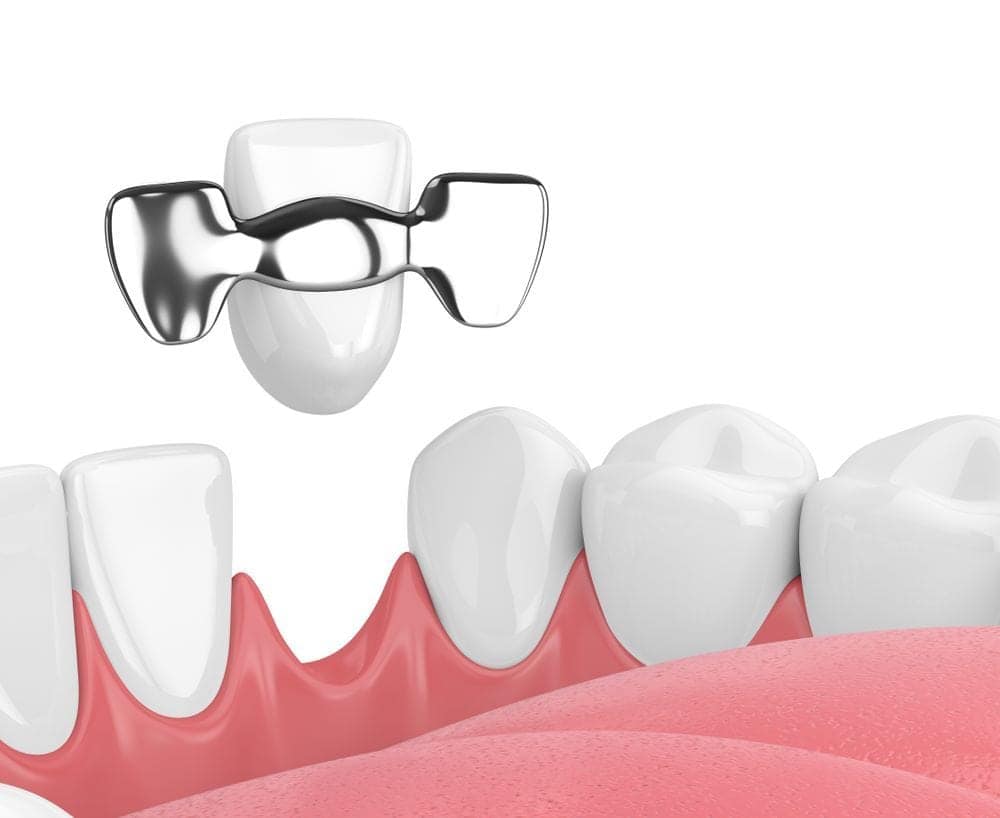
At our clinic, we prepare even before the extraction, take impressions and make a temporary restoration, so you don’t have to be without a tooth for a single minute.
We most often use a Maryland bridge or a space-maintaining clip, which not only fills the gap but also prevents neighbouring teeth from tilting into the space.
What makes a tooth extraction complication-free?
If the dentist decides that extraction is unavoidable, these are the 3 most important ingredients for a successful extraction:
- Modern anaesthesia, which makes the procedure painless.
- Our clinic’s experienced oral surgeons, thanks to whom even more difficult extractions take place without trauma or complications.
- Following medical advice, thanks to which you can expect fast, complication-free healing after the extraction.
Brushing and oral care after tooth extraction
Since proper oral hygiene is also important after extraction, our dentists highlight the importance of aftercare after every procedure. It can do a lot to prevent inflammation after extraction, as well as unpleasant complications and further pain.
- Don’t eat while the numbness lasts, so you don’t injure yourself when biting!
- Avoid smoking for a few days after the extraction, as it can cause the wound to start bleeding! Also put fizzy drinks, alcohol, coffee and milk aside for a while, but you can drink other liquids freely.
- Don’t rinse for 3 days. Avoid spitting too, as the suction created at the extraction site removes the blood clot that helps the wound heal!
- If you feel the need, feel free to take painkillers for a few days!
- Pay even more attention than usual to oral hygiene, and don’t forget to clean the wound (carefully, with a soft-bristled toothbrush, touching the area gently)!
Recommended for you
What can you eat after a tooth extraction and what should you avoid?
- How can a tooth extraction be complication-free? What is and isn’t allowed in the days after an extraction? How can you avoid prolonged, difficult healing?
High-tech cleaning to prevent tooth extraction and dental problems
Unfortunately, many people avoid the annual, sometimes uncomfortable scaling they need, which means they have to face many problems. Today, our specialists recommend the most advanced Guided Biofilm Therapy cleaning to patients instead of conventional scaling, as it is finally truly painless, quick and effective all at once:
- It helps us create professional oral hygiene that lets you say goodbye not only to tartar, but also to gum inflammation and recurring tooth decay.
- After this special scaling, you get clean, fresh breath, whiter teeth and a healthier oral flora, and with regular treatment you can expect less and less tartar to form.
- It can prevent inflammation from developing around an implant, and is also effective in treating existing pockets: the area can be cleaned without damaging or endangering the implant.
- It cleans restorations without harsh abrasion, and is gentle even on the tiniest baby teeth.
- The treatment is faster, more targeted and more effective. Thanks to its unique No Pain technology, scaling is truly painless.
How much does tooth extraction cost at our clinic?
The complete treatment becomes personalised once you attend a consultation. An assessment can determine exactly what treatments will be needed and how extensive the replacement of extracted teeth will be, so you get a clear picture of the costs ahead.
Tooth extraction prices at our clinic can be found in the price list menu or by clicking here.
This page was reviewed by: Dr. Sándor Kovách – oral surgeon, implantologist