 1133 Budapest, Tutaj u. 6/b, Cézár-Ház
 Opening hours: Mo-Fr 08:00-20:00
 Contact: +36 1 801 2250

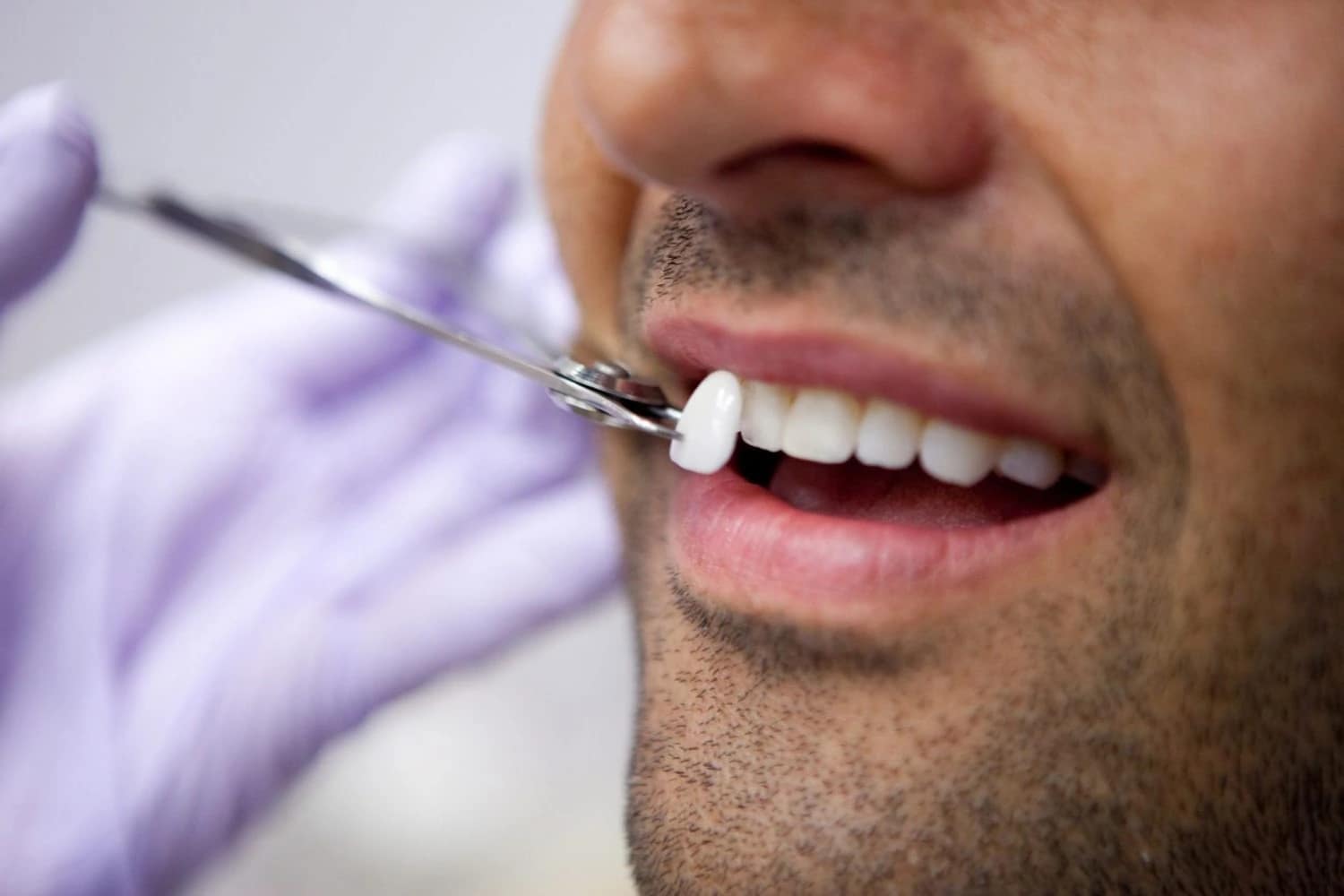
A porcelain veneer is a restoration used for the aesthetic transformation of teeth. The specially designed veneer is actually an extremely thin ceramic shell made in a dental laboratory, which is bonded to the surface of the prepared teeth. The procedure is most often used to improve the front teeth.
What is a porcelain veneer?
Imagine a wafer-thin ceramic shell made of pure porcelain that is nevertheless incredibly strong. A veneer similar to a contact lens, which blends invisibly onto the surface of your tooth, yet dramatically improves your smile.
Thin yet exceptionally strong porcelain veneers are made in a dental laboratory, and with them you can achieve a unique aesthetic effect and eliminate minor but bothersome defects and asymmetries.
Porcelain veneer consultation
Careful planning of the restoration is an essential step in making veneers.
- An important aspect of planning is identifying any dental or bite irregularities. If the starting situation is contraindicated, alternatives to porcelain veneers may be considered.
- During the aesthetic consultation, the tooth shape that best suits your personality and the desired tooth colour are agreed.
- Special requirements, or the considerations for a complete smile makeover, are brought together in a smile design.
In this article:
What problems do porcelain veneers solve?
Types of dental veneers – direct or porcelain veneers?
How porcelain veneers are made
What does it take for porcelain veneers to last?
When should you ask for a consultation?
What problems do porcelain veneers solve?
Careful planning is an essential step in making veneers. The cosmetic dentistry consultation is not only about shapes and tooth colour.
Important factors:
- the patient’s subjective complaints,
- whether there are dental or bite irregularities,
- whether dental veneers are suitable for solving the problem.
1. When teeth whitening is not effective enough
The effects of coffee, tea and cigarettes keep coming back despite teeth whitening. In such cases, porcelain veneers provide a uniform, lasting colour.
2. Persistent discolouration and enamel defects
Root-filled or damaged teeth, white spots, and teeth with discolouration caused by medication or trauma respond poorly or not at all to whitening. These problems can be corrected aesthetically with veneers.
3. Gaps between teeth
If too large a gap (diastema) has developed between one or more front incisors, porcelain veneers can unify the appearance of the teeth and create a harmonious dental arch.
4. Slightly irregular teeth
If the teeth are slightly “messy” but there is no functional bite problem, veneers can provide a quick aesthetic solution.
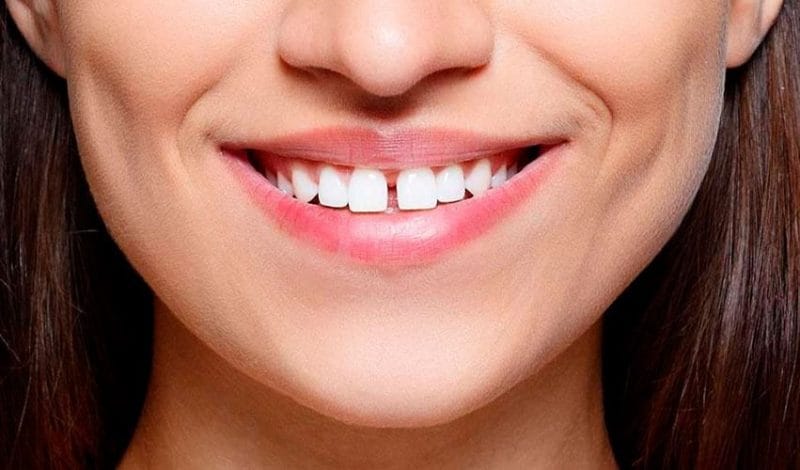
5. Damaged or chipped teeth, aesthetic problems
With shape problems, a broken tooth or a chipped incisal edge, porcelain veneers can easily eliminate shape defects and create a harmonious smile.
Types of dental veneers – direct or porcelain veneers?
There are two types of veneers. One is the indirect, i.e. porcelain veneer, and the other is the direct veneer.
Indirect veneers
They are called indirect because the restoration is not made directly in the mouth, but in a dental laboratory. Porcelain veneers are one example. The ceramic shell, as thin as a contact lens, is bonded to the prepared outer surface of the teeth.
- It is modelled, coloured and shaped in a dental laboratory, and then bonded to the tooth by the dentist.
- Its aim is to correct aesthetic irregularities while preserving the natural appearance of the tooth.
- One of the most popular solutions in cosmetic dentistry.
- It provides a lasting and natural aesthetic effect.
Thanks to modern dental materials, porcelain veneers:
- Have natural translucency
- Are extremely durable
- Are made with minimal grinding of the teeth
- Allow fast aesthetic change

Direct veneers
A direct veneer is made immediately, in a single visit, while you sit in the dental chair. The dentist makes it at the clinic, shaping the new tooth surface from composite material.
- Although it is ready immediately, making it requires a greater aesthetic sense from the dentist.
- Its advantage is speed, but it requires great precision and experience.
- It is an excellent option for aesthetically improving individual teeth, but treating several teeth at once requires more patience from the patient too. Making direct veneers and creating the new shape of the teeth is time-consuming.
Recommended for you
Book a consultation and meet our specialists!
Or book by phone:
How porcelain veneers are made
1. Assessment
The first consultation starts with an examination, during which the dentist assesses the condition of the teeth and the bite.
- A precise treatment plan is drawn up, in line with the schedule for making the veneers. A panoramic X-ray is essential.
- If a tooth has died as a result of a previous injury, the first step before making the veneer will be root canal treatment.
2. Smile design
With digital smile design, we make the expected result visible in advance on photos, while a mock-up shows how the new ceramic veneers will actually look!
- Based on a preliminary impression, the dental laboratory can model the smile created during smile design.
- By placing the special temporary smile mock-up on the teeth, the future smile can be tried on.
3. Preparing the teeth
- After local anaesthetic, a minimal amount of enamel is removed from the tooth surfaces (less than 1 mm).
- Next, an impression is taken for the final veneers, the tooth colour is determined and a temporary restoration is made for the teeth.
4. Making the veneers
In the laboratory, the dental technician individually shapes and colours the porcelain veneers so that they harmonise with the smile.
5. Bonding
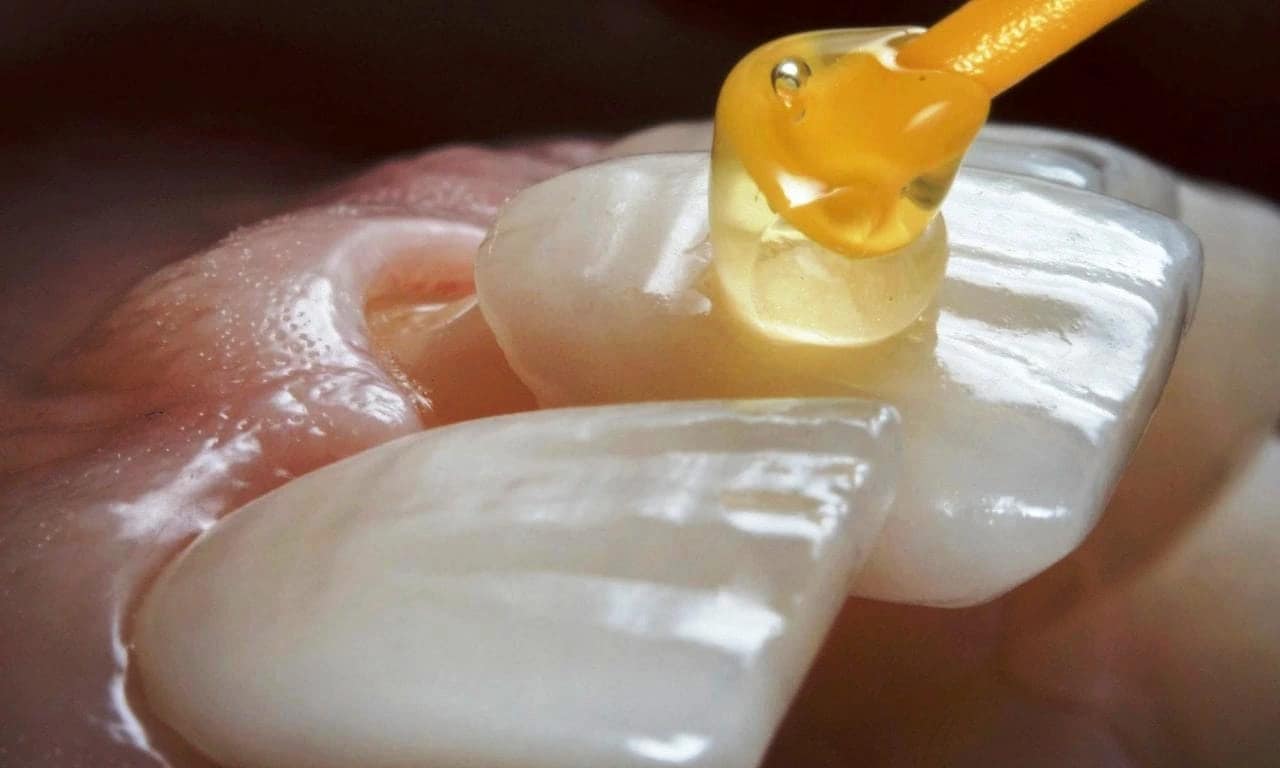
The finished veneers are bonded to the surfaces of the prepared teeth with a special adhesive, and then the bite and fit are checked.
How painful is getting porcelain veneers?
- The procedure is completely painless, as preparation is carried out under local anaesthetic.
- If the patient requests a digital impression instead of a conventional one, the whole process will be as gentle and free of discomfort as possible.
- Until the final veneers are ready, a temporary restoration protects the teeth from sensitivity.
What can make making veneers difficult?
Placing veneers on individual teeth requires greater aesthetic precision than transforming several teeth together or an entire smile.
It is important that:
- the new appearance of the tooth matches the neighbouring teeth perfectly,
- it looks natural,
- it does not stand out from the row.
So when transforming individual teeth, determining the exact tooth colour is a much more complex task. The same applies when a direct veneer is made, as the dentist applies the filling material in layers, individually creating the colour and appearance of the tooth.
What are the alternatives to veneers?
Depending on the aesthetic defect you want to correct and how extensive a procedure you are willing to undergo, our dental clinic offers several solutions:
1. Teeth whitening:
The result and durability of teeth whitening vary from person to person, and it often does not help at all with certain types of discolouration (a greyed root-filled or dead tooth).
2. Orthodontic treatment:
Orthodontic treatment is a process that requires patience and time, at the end of which the teeth are straight, but their shape and colour remain unchanged.
3. Ceramic crown:
An aesthetic ceramic crown, which involves grinding down the teeth, can quickly solve several problems: the bite can be restored, shape defects of the teeth can be corrected, and tooth colour can be unified.
Reasons to choose porcelain veneers
- Painless, simple, and ready in a few days.
- A comfortable and natural-looking solution. Its greatest advantage is that thanks to the translucency of porcelain, it looks 100% lifelike.
- Faster than orthodontic treatment, it offers an immediate solution for aesthetic problems.
- The result is guaranteed to be more beautiful and longer-lasting than with teeth whitening.
- Gentler than a crown, with minimal loss of tooth structure.
According to patient feedback, one of the most important advantages of ceramic veneers is that the teeth do not have to be completely ground down to achieve a perfect smile.
What does it take for porcelain veneers to last?
Modern porcelain veneers are extremely resistant, while their natural translucency also delivers outstanding aesthetic results. To prevent finished porcelain veneers from being damaged prematurely, proper oral care at home is also important.
- A veneer – just like a natural tooth – can chip or break. The most common causes are teeth grinding at night, or habits that are harmful to teeth and veneers (chewing pencils or nails, cracking hard seeds, etc.)
- Giving up harmful habits requires conscious attention, and the effects of involuntary teeth grinding at night must be prevented. To avoid problems, our specialists ask patients to wear a night guard, which can significantly extend the life of the restoration.
For a long lifespan, it is important to:
- Brush for 2 minutes twice a day, with proper oral care.
- Replace your toothbrush every 3 months.
- Use floss or a water flosser and interdental brushes every day.
- Wear a night guard.
- Have regular dental check-ups.
What aftercare do veneers need?
Regular professional cleaning is needed to keep porcelain veneers looking natural and to extend their life. Instead of conventional scaling, our specialists recommend Guided Biofilm Therapy cleaning:
- It removes tartar and the bacterial biofilm layer that causes gum inflammation
- It stops tartar from building up
- With regular use, the risk of decay decreases and gum health improves
- It is gentle, cleaning without scratching or harsh abrasion
- It lastingly preserves the shine and silky gloss of restorations.
Recommended for you
Book a consultation and meet our specialists!
Or book by phone:
Guarantee on porcelain veneers
Our clinic provides a guarantee of 1 year on porcelain veneers, for which it is important to follow the dentist’s recommendations and to keep to the recommended care programme:
- You must attend the free adjustment appointment to check and adjust the bite height.
- You must attend conventional scaling or Guided Biofilm Therapy cleaning at least once every six months.
- You must attend check-ups every six months.
Porcelain veneer prices
Thanks to the explosion in quality in dentistry and dental technology in recent years, we are living through a revolution in cosmetic dentistry. Today we make restorations, including aesthetic ceramic veneers, from the highest-quality materials.
Porcelain veneer prices can be found in the price list menu, under cosmetic dentistry.
When should you ask for a consultation?
It is worth booking an appointment if you experience any of the following problems:
- bothersome discolouration
- a gap between teeth
- an incomplete or chipped front tooth
- slight irregularity
- dissatisfaction with the shape of your teeth or the overall look of your smile
A cosmetic dentistry consultation can help you decide whether porcelain veneers are the right solution for you.
Porcelain veneers in Budapest – Clinident, District 13
Our clinic’s aesthetic specialists always combine the latest tools, the most modern techniques and materials to ensure high quality.
High-tech equipment is available on site:
- Panoramic X-ray, 3D CT, smile design, microscopic root canal treatment, digital impressions, EMS Airflow Prophylaxis Master.
Backed by a professional dental laboratory:
- Thousands of exceptionally beautiful, unique and natural restorations are made every year using top-quality materials.
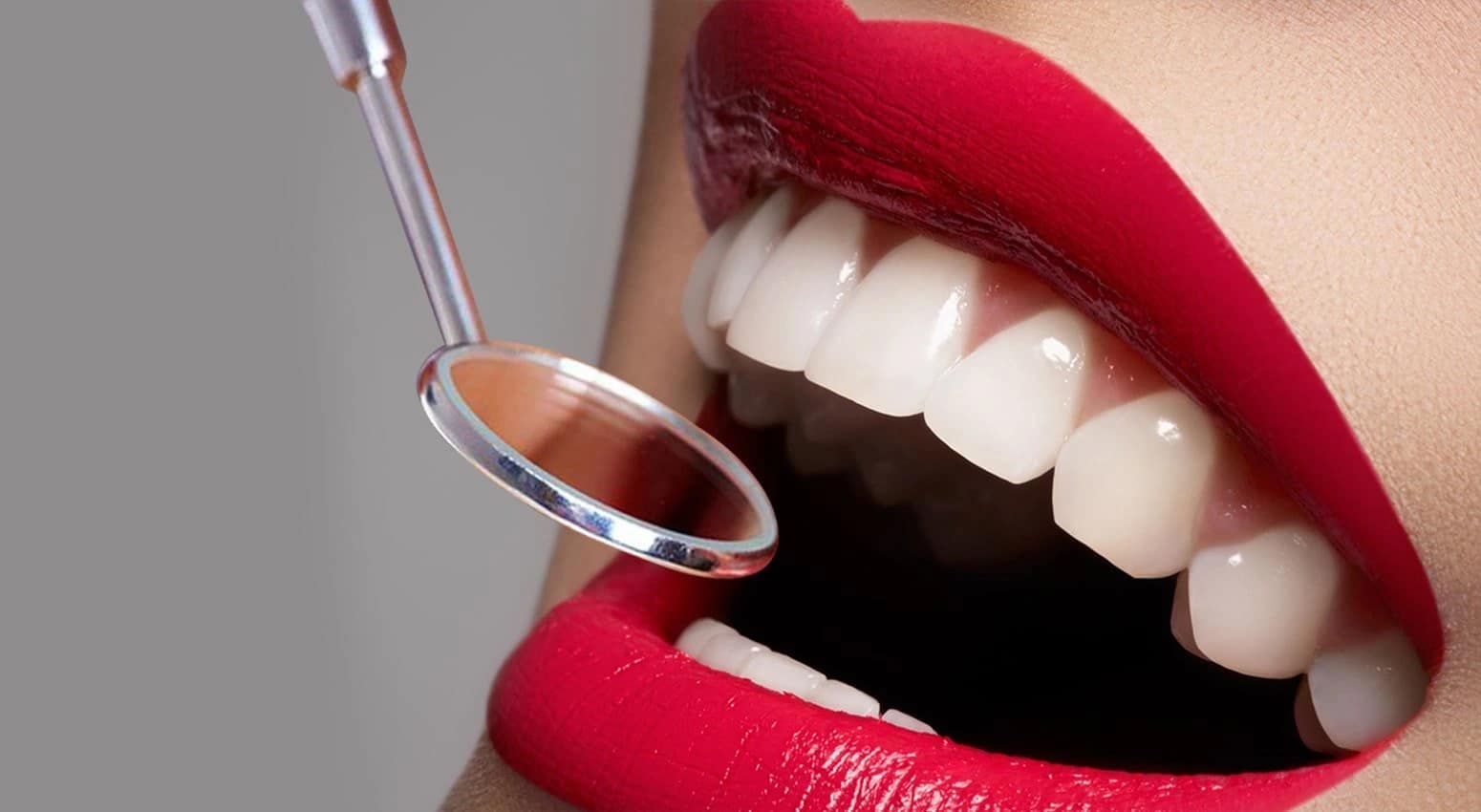
Our restorations are made to last:
- Thanks to technology and expertise, porcelain veneers are just as durable as crowns, but involve minimal loss of tooth structure.
At our clinic, we provide the most modern dental aftercare:
- With gentle Guided Biofilm Therapy cleaning (EMS), we improve the resistance of teeth and gums, extend their lifespan and give teeth and veneers a lasting shine.
This page was reviewed by: Dr. Péter Czigler